Ten artykuł jest też dostępny w języku: polski. Wedding invitation wording: examples for every kind of celebration →
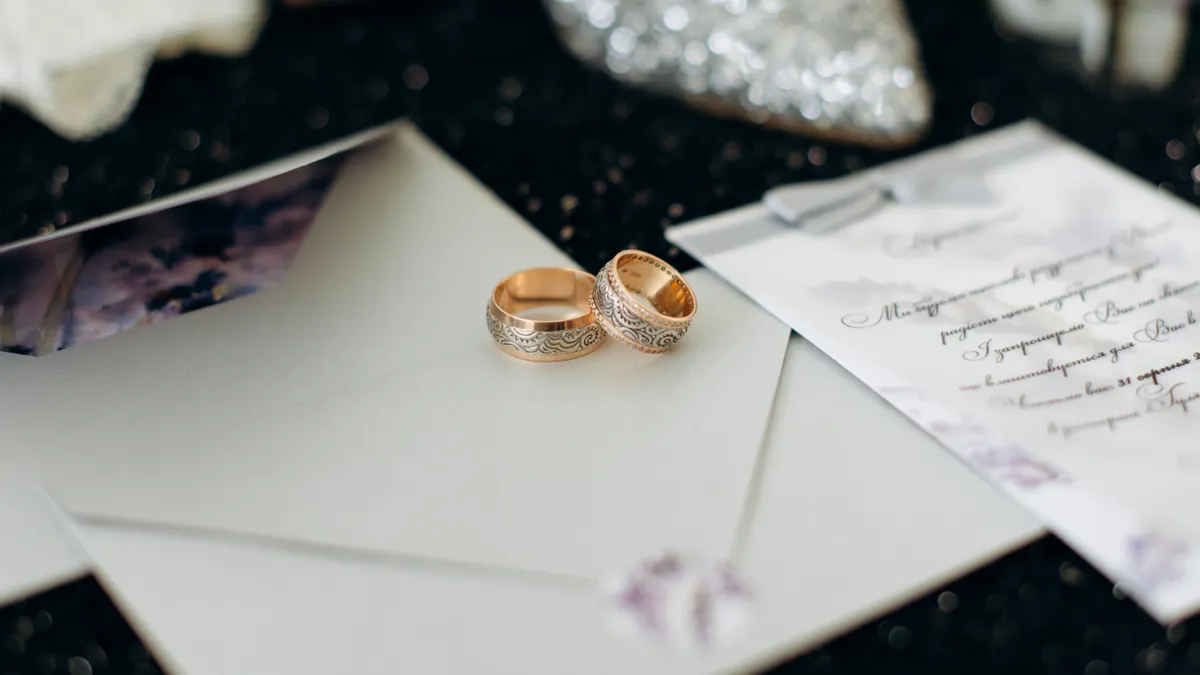
Wedding invitation wording: examples for every kind of celebration
The words on your invitation set the tone before anyone arrives. Here is what to say, in what order, with wording you can copy for formal, relaxed, family-hosted and small weddings.
In this article
- The seven parts of a wedding invitation
- Formal wedding invitation wording
- When parents are hosting
- Relaxed and modern wording
- Wording for a small, second or later-in-life wedding
- Wording when you've already married
- Formal vs relaxed: a quick comparison
- The RSVP line and the details card
- Be clear about who is invited
- Common wording mistakes to avoid
- Putting it together
- Questions couples ask
A wedding invitation only has a few lines to work with, yet those lines do a lot. They tell guests who is hosting, how formal the day will be, where to be and when, and what you'd love them to do next. Get the wording right and guests feel welcomed before they've even replied. Get it wrong and you'll spend weeks answering the same three questions by text.
The good news is that invitation wording follows a simple pattern. Once you know the parts, you can make it as traditional or as playful as you like. Below you'll find the structure, more than a dozen examples you can copy with one tap, and the small details (titles, numbers, the word "honour") that trip people up.
The seven parts of a wedding invitation
Almost every wedding invitation, from black tie to backyard, is built from the same pieces. You don't need all of them, but this is the order guests expect to read them in.
- The hosts
Traditionally the people paying for the wedding. Today it's often the couple, both families, or "Together with their families".
- The request line
"Request the honour of your presence" (a religious ceremony), "request the pleasure of your company" (formal, not religious) or "invite you to celebrate" (relaxed).
- The couple's names
Full names feel formal; first names feel warm. Traditionally the bride's name comes first, but any order works.
- Date and time
Written out in full for formal invitations ("Saturday, the twelfth of June"), in numbers for relaxed ones.
- The place
Venue name, then city. Online invitations can include the full address with a map link.
- What follows
"Reception to follow" or "Dinner and dancing to follow" so guests know to plan for the evening.
- How to reply
A date and a method. With an online invitation, guests just tap their personal RSVP link.
Formal wedding invitation wording
Formal wording is ceremonial on purpose. It avoids abbreviations, writes numbers and times out in words, and uses "o'clock" rather than "4 PM". It suits evening weddings, religious ceremonies, black-tie receptions and families who value tradition.
Together with their families
Amelia Grace Thompson
and
Daniel James Okafor
request the pleasure of your company
at their marriage
Saturday, the twelfth of June
two thousand twenty-seven
at four o'clock in the afternoon
The Old Mill
Toronto, Ontario
Dinner and dancing to follow
Amelia Grace Thompson
and
Daniel James Okafor
request the honour of your presence
at the celebration of their marriage
Saturday, the twelfth of June
at half past two o'clock
Saint Michael's Cathedral
Toronto
"The honour of your presence" is traditionally kept for ceremonies in a place of worship. "The pleasure of your company" is used everywhere else. Most guests won't notice the difference, but older relatives might, so it's worth getting right.
Small formal details that matter
- Spell out the time. "Four o'clock" rather than "4:00 PM". For half hours, write "half past four".
- No "PM" needed. Use "in the afternoon" or "in the evening" instead. Anything after 5 o'clock is evening.
- The year is optional. On formal invitations it's often written out ("two thousand twenty-seven"), but it's fine to leave it off.
- Use full names and titles. Middle names add formality. Titles such as "Doctor" are written in full.
- British or American spelling? "Honour" and "favour" are traditional in Canada and the UK; "honor" and "favor" are standard in the US. Pick one and use it throughout.
When parents are hosting
If one family is hosting (or paying for most of the day), tradition puts their names first. It's a lovely way to thank them, and many parents are quietly delighted to see it.
Mr. and Mrs. Robert Thompson
request the pleasure of your company
at the marriage of their daughter
Amelia Grace
to
Daniel James Okafor
Saturday, the twelfth of June
at four o'clock in the afternoon
Mr. and Mrs. Robert Thompson
and
Dr. Ngozi Okafor and Mr. Emeka Okafor
request the pleasure of your company
at the marriage of their children
Amelia Grace and Daniel James
Relaxed and modern wording
Relaxed invitations sound like the two of you. They can use first names, numbers, exclamation marks and a little humour. They suit daytime weddings, garden parties, beach ceremonies and anything with a food truck.
Amelia & Daniel are getting married!
Come celebrate with us
June 12, 2027 · 4 PM
The Old Mill, Toronto
Dinner, drinks and dancing to follow
We said yes,
now we'd love you to say you'll be there.
Join Amelia and Daniel for a day of love,
laughter and far too much cake.
Amelia + Daniel
are tying the knot
06.12.27 · The Old Mill, Toronto
Party to follow
Your invitation is the first thing guests see of your wedding. Let it sound like you.
Wording for a small, second or later-in-life wedding
Smaller weddings often have a more personal tone. If it's a second marriage, or you've been together for years, you may want wording that celebrates your story rather than following the traditional script.
Because you've shared in our lives,
we'd love for you to share in our joy.
Amelia and Daniel invite you to their wedding.
Amelia Thompson and Daniel Okafor
together with their children
Olivia and Sam
invite you to celebrate their marriage
Including children by name is a lovely touch for a blended family. It tells guests that this is a family celebration, not just a couple's.
Wording when you've already married
Lots of couples marry quietly at city hall and celebrate later. Make it clear the party is a celebration, so nobody turns up expecting a ceremony.
We tied the knot!
Now let's celebrate.
Join Amelia and Daniel for dinner, drinks and dancing
Saturday, June 12 · 6 PM
Please join us for a reception
in honour of the marriage of
Amelia Thompson and Daniel Okafor
Formal vs relaxed: a quick comparison
| Formal | Relaxed | |
|---|---|---|
| Request line | "request the pleasure of your company" | "invite you to celebrate" |
| Names | Full names with middle names | First names |
| Date | Saturday, the twelfth of June | Sat, June 12 |
| Time | four o'clock in the afternoon | 4 PM |
| Reception line | Reception to follow | Food, drinks and dancing after! |
| Best for | Evening, religious, black tie | Daytime, outdoor, casual |
The RSVP line and the details card
The RSVP line asks guests to do something, so it needs a clear deadline. Three to four weeks before the wedding is typical, because your caterer usually wants final numbers about two weeks before.
The favour of a reply is requested
by the fifteenth of May
Please reply online by May 15.
Your personal link has everything you need.
On paper, extra details (accommodation, dress code, the gift registry, parking) go on a separate details card. Online, they live on your invitation page, under the main wording, so the invitation itself stays clean.
"Black tie", "Cocktail attire" or "Garden party: comfortable shoes!"
Hotel names and any group rate code, with a booking link.
One gentle sentence. Never on the main invitation wording.
Parking, shuttles, and a map link for each venue.
Be clear about who is invited
The most common source of awkward phone calls is not the wording; it's confusion about who the invitation is for. Can the kids come? Is there a plus-one? On paper, the names on the envelope answer this. Online, it helps to send each household its own link that already knows who is invited.
Common wording mistakes to avoid
- Mixing formal and relaxed. "Request the honour of your presence" followed by "Let's party!" feels jarring. Pick a tone and keep it.
- Leaving out the city. Guests travelling in need to know where the venue is, not just its name.
- Forgetting the day of the week. "June 12" alone makes people check a calendar. "Saturday, June 12" doesn't.
- Too much information. The invitation is for the essentials. Save hotels, registry and parking for the details.
- Typos in names. Have someone who knows both families check every spelling, especially accents and hyphens.
Putting it together
Start from the example closest to your wedding, change the names, and then read it aloud to someone who knows you. If they laugh where you meant them to and nod where you meant them to, you're there. Then pair it with a design that matches the tone: a classic serif design for formal words, a botanical or modern design for relaxed ones.
If you're sending online, you'll get two bonuses for free: guests can tap the address for directions, and they can reply in a minute from their phone, with meal choices and dietary needs, without a single follow-up text from you.
Questions couples ask
Whose name goes first on a wedding invitation?
Traditionally the bride's name comes first on an invitation hosted by her parents, and the groom's name comes first on the reply card. For same-sex couples, or if you simply prefer, choose the order that sounds best, or put names in alphabetical order.
Should I write "honour" or "honor"?
Use "honour" and "favour" in Canada and the UK, and "honor" and "favor" in the US. What matters most is being consistent across the whole invitation.
Do I need to include the year?
No. The year is optional. Formal invitations often spell it out, while relaxed invitations usually leave it off because guests know which year it is.
Can I mention our gift registry on the invitation?
Not on the main invitation wording. Mention it on your details card or invitation page, with one short, gentle line.
How do I word an invitation for a wedding that's already happened?
Make it clear it's a celebration, not a ceremony: "We tied the knot! Now let's celebrate" or "Please join us for a reception in honour of the marriage of..."
Make your invitation in minutes
Beautiful designs, an RSVP for each guest and automatic reminders. Free for up to 25 guests.
Start freeKeep reading
-
 23 listopada 2026 · 14 min read
Wedding invitation etiquette: the complete guide to the dos and don'ts
Wedding invitation etiquette for today's couples: who to invite, who hosts, timing, plus-ones, children, registry, dress code, RSVPs and sending invitations online.
-
 23 listopada 2026 · 14 min read
How to address wedding invitations: examples for every guest
How to address wedding invitations and envelopes: married couples, different last names, doctors, families, plus-ones, widowed guests and online invitations.
-
 23 listopada 2026 · 13 min read
Wedding dress codes explained, from black tie to casual
Every wedding dress code explained: white tie, black tie, black tie optional, cocktail, semi-formal, beach and casual, plus how to put a dress code on your invitation.