Ten artykuł jest też dostępny w języku: polski. Bilingual wedding invitations: wording and tips for two languages →
Bilingual wedding invitations: wording and tips for two languages
When your families speak different languages, a bilingual invitation tells everyone they're equally welcome. Here's how to choose a layout, write wording that works in both languages, and avoid the classic mistakes.
In this article
A wedding often brings two families, two histories and sometimes two or three languages into one room. Grandparents who are most comfortable in French, Spanish, Portuguese or Hindi deserve an invitation they can read without help, just as much as your friends who only speak English. A bilingual invitation is a small, visible way of saying: this is everyone's celebration.
It does take a little more thought than a single-language invitation. Two versions need to fit on one card, or each guest needs the right version. Dates and times follow different conventions. And a word-for-word translation often sounds stiff. This guide covers all of it, with wording you can copy.
Choose your approach
| Side by side | One language per guest | |
|---|---|---|
| What guests see | Both languages on one invitation | The invitation in their own language |
| Best for | Printed invitations | Online invitations |
| Space needed | Twice as much | The same as usual |
| Risk of clutter | ~ | ✕ |
| Every guest sees both | ✓ | Only if they switch |
Side by side
Both languages appear on the same invitation, either in two columns or one after the other. It's lovely on paper, and it shows both families on equal footing. The downside is space: you need a simpler design, shorter wording, or a larger card.
One language per guest
Each guest receives the invitation in the language they read best. On paper this means printing two versions and being careful with envelopes. Online it's simple: the invitation appears in the guest's language, and they can switch with one tap if they'd like to read the other.
Wording examples
Keep the versions equal in warmth and formality rather than identical word for word. Here's the same simple invitation in four languages.
Together with their families
Amelia and Daniel
invite you to celebrate their wedding
Saturday, June 12, 2027 at 4 PM
Avec leurs familles
Amelia et Daniel
vous invitent à célébrer leur mariage
le samedi 12 juin 2027 à 16 h
Junto con sus familias
Amelia y Daniel
te invitan a celebrar su boda
el sábado 12 de junio de 2027 a las 16:00 h
Junto com suas famílias
Amelia e Daniel
convidam você para celebrar o seu casamento
no sábado, 12 de junho de 2027, às 16h
Dates, times and numbers
Each language has its own conventions, and getting them right is the quickest way to show care.
| Language | Date | Time |
|---|---|---|
| English (US, Canada) | Saturday, June 12, 2027 | 4 PM |
| English (UK) | Saturday 12 June 2027 | 4pm |
| French (Canada) | le samedi 12 juin 2027 | 16 h |
| French (France) | le samedi 12 juin 2027 | 16h |
| Spanish | sábado 12 de junio de 2027 | 16:00 h or 4 de la tarde |
| Portuguese (Brazil) | sábado, 12 de junho de 2027 | 16h |
Note that French, Spanish and Portuguese don't capitalise days or months, and most use the 24-hour clock on invitations.
Tips for a clear bilingual invitation
Your names, venue names and addresses stay the same in both versions.
Use the same font size for both languages, so neither looks secondary.
Ask a family member who speaks each language to read it.
Two languages double the text. Trim each version to the essentials.
Which language goes first?
There's no fixed rule. Many couples put the language of the hosting family first, or the language most guests read. Others put the language of the country where the wedding takes place first. If both families are hosting equally, two columns side by side avoid the question entirely.
The rest of the invitation
The main wording is only part of it. Think about the details guests need, in both languages: the RSVP line, the dress code, directions and the gift registry. On paper, these can go on a bilingual details card. Online, they appear in the guest's language with the rest of the page.
Please reply by May 15
Merci de répondre avant le 15 mai
The ceremony and the day itself
A bilingual invitation sets expectations for a bilingual day. Think about a bilingual program, an officiant who can say a few words in both languages, and readings in each. Even a simple welcome sign in two languages helps guests feel at home.
A bilingual invitation says, before the day begins: this celebration belongs to both families.
How online invitations help
With I Say I Do, the invitation and RSVP form appear in each guest's language, with the date, time and buttons translated for them, and guests can switch language with one tap. It works in English, French, Spanish, Portuguese, Polish, Hindi and Japanese. Your own words, such as your welcome message, can be written in both languages, so every guest reads them.
- Write your wording in both languages
Have each checked by a native speaker.
- Set each household's language
Grandma in Montréal gets French; your college friends get English.
- Send personal links
Each guest opens the invitation in their language.
- Collect every reply in one list
Whatever language guests answer in.
Wording for bilingual families: more examples
Sometimes the most touching invitations use the two languages differently: the formal invitation in one language and a personal line from the couple in the other. For example, an English invitation with a closing line in Spanish for the groom's grandparents: "Nos haría muy felices que nos acompañaran." Or a French invitation for the bride's family with "We can't wait to celebrate with you" for the English-speaking friends.
If one family hosts, it's natural for their language to lead. If you'd like both families to feel equally represented, two columns of the same size side by side, with a shared line at the bottom (your names and the date), creates a balanced, elegant layout.
When one family speaks both languages
If your partner's family is bilingual but your grandparents only read one language, you might not need a full bilingual invitation for everyone. Send the invitation in each household's preferred language and keep the shared details, such as names, date and venue, identical. Online, that's one setting per household.
Proofreading in two languages
Typos are twice as likely with twice the words. Ask one reader per language, and give them the final version, not a draft. Check accents carefully: é, ç, ñ, ã and ü change meanings and names, and they're the first things to disappear when text is copied between programs.
Three or more languages
Some families need three languages, or more. On paper, that usually means separate versions rather than one crowded card. Online, it's no harder than two: each guest simply sees their own. If you have relatives who read a language your invitation service doesn't offer, a short personal note in that language, sent with the link, goes a long way.
Questions couples ask
How do you write a bilingual wedding invitation?
Choose whether both languages appear side by side or each guest gets their own language, then write equal versions in tone, using each language's date and time format, and have a native speaker check them.
Which language should go first on a bilingual invitation?
Usually the language of the hosting family, the language most guests read, or the language of the country where the wedding takes place.
Should I translate our names on the invitation?
No. Names, venue names and addresses stay the same in every language.
Can guests reply in their own language?
Yes, with an online RSVP that shows the form in each guest's language, all replies still end up in one list.
Is it OK to use a translation app?
For a first draft, but always have a native speaker check. Wedding wording is full of formal phrases that translate badly word for word.
How much more does a bilingual printed invitation cost?
Usually nothing extra if both languages fit on one card, but you may need a larger card or a second insert, which adds printing and postage. Online invitations in several languages cost the same as one.
Make your invitation in minutes
Beautiful designs, an RSVP for each guest and automatic reminders. Free for up to 25 guests.
Start freeKeep reading
-
 23 listopada 2026 · 7 min read
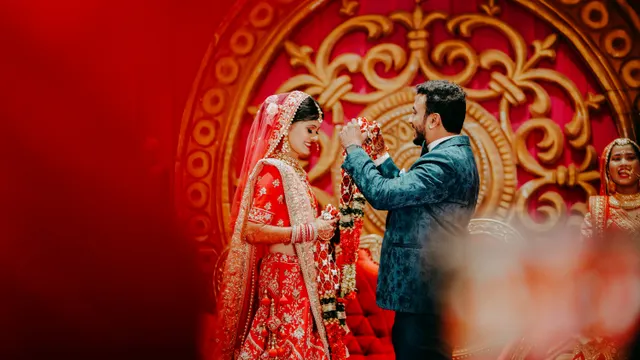
Indian wedding invitation wording for every function
Indian wedding invitation wording, from the opening blessing to the mehndi, sangeet, haldi, ceremony and reception, plus dress codes and inviting guests to each function.
-
 23 listopada 2026 · 12 min read
How to write wedding vows: a simple method, examples and a vow builder
Write wedding vows you'll be proud to read, with a 5-part structure, original examples, a free vow builder, a vow-style quiz and tips for reading them aloud.
-
 23 listopada 2026 · 14 min read
Wedding invitation etiquette: the complete guide to the dos and don'ts
Wedding invitation etiquette for today's couples: who to invite, who hosts, timing, plus-ones, children, registry, dress code, RSVPs and sending invitations online.