Ten artykuł jest też dostępny w języku: polski. Digital vs paper wedding invitations: how to choose →
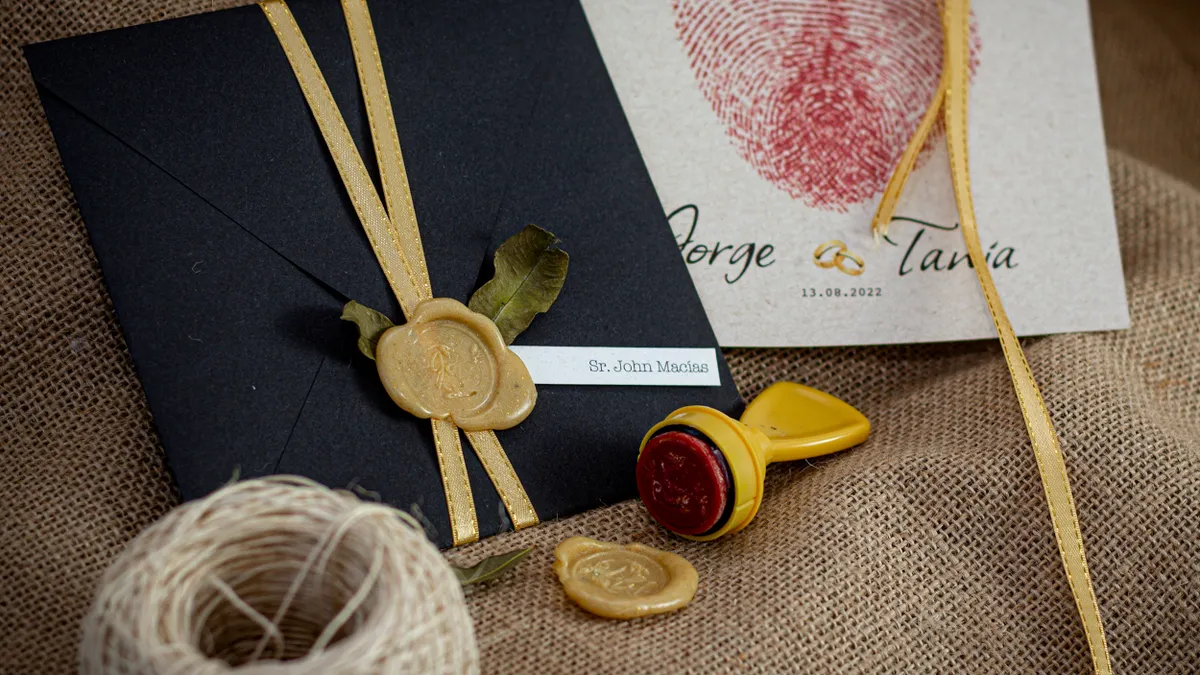
Digital vs paper wedding invitations: how to choose
Not long ago an emailed invitation felt casual. Now plenty of couples send their invitations online, and many do both. Here's an honest comparison of cost, etiquette and guest experience to help you choose.
In this article
- The cost difference
- Side-by-side comparison
- Why couples choose digital invitations
- Why couples choose paper invitations
- Is it rude to send wedding invitations by email?
- The best of both: mixing digital and paper
- What about guests who aren't online?
- Environmental impact
- How to decide: five questions
- What guests actually think
- The bottom line
- Questions couples ask
Choosing between digital and paper invitations used to be simple: paper was proper, email was for parties. That line has blurred. Today, beautifully designed online invitations arrive by email, WhatsApp or text, guests reply in a minute, and couples save hundreds of dollars on printing and postage. At the same time, many people still love holding a heavy card with their name in calligraphy.
There's no single right answer. The best choice depends on your guests, your budget, your timeline and how formal your wedding is. This guide lays out the real differences, answers the etiquette question everyone asks, and shows how many couples combine the two.
The cost difference
Printed invitations add up quickly. A typical suite includes the invitation, an RSVP card with its own envelope and stamp, a details card, an outer envelope and postage. Add design fees, printing upgrades such as foil or letterpress, addressing and the occasional reprint for typos, and costs climb fast.
Online invitations have no printing, envelopes or postage, and many services charge one flat price for the whole wedding. For a large guest list, that's often the difference between a few hundred dollars and a few dozen. (Prices above are rough North American ranges, and vary with design, paper and country.)
Side-by-side comparison
| Digital | Paper | |
|---|---|---|
| Cost for 100 guests | Low, often one flat price | High: printing, envelopes, postage |
| Time to arrive | Seconds | Days to weeks |
| Lost in the mail | ✕ | ~ |
| Easy RSVP | ✓ | ~ |
| Meal choices and dietary needs | ✓ | ~ |
| Update details after sending | ✓ | ✕ |
| Automatic reminders | ✓ | ✕ |
| Keepsake to hold | ✕ | ✓ |
| Works for guests who aren't online | ~ | ✓ |
| Paper waste | None | Some |
Why couples choose digital invitations
No printing, envelopes or postage, which adds up quickly for a large list.
Invitations arrive in seconds, wherever your guests live.
Guests reply from their phone, and answers land in your list, already counted.
If the time or venue changes, update it once and everyone sees it.
Relatives abroad can read and reply in their own language.
A good choice for a lower-waste wedding.
There's a practical advantage that's easy to overlook: digital invitations keep working after they're sent. Guests can come back to the same link for the address, the schedule, the dress code and the registry. You can see who has replied at a glance, and reminders go only to people who haven't replied.
Why couples choose paper invitations
Paper invitations have real advantages too. They're a keepsake: many people keep wedding invitations on the fridge, in a memory box or in the wedding album. They suit very formal weddings and families who see a printed invitation as a sign of respect. And some guests, often grandparents, simply aren't online, or don't use email.
A wedding invitation isn't judged by its paper. It's judged by whether guests feel truly invited.
Is it rude to send wedding invitations by email?
Not any more, as long as the invitation looks and feels special. A beautiful design, personal wording and a private link for each household come across as thoughtful, not lazy. What feels rude is a plain, mass email with everyone's address in the "To" line, or a group chat message with a link to a form.
A few things make a digital invitation feel as considered as paper:
- A proper design that matches your wedding, not a plain text email.
- Personal delivery. Send each household its own link, ideally with a short personal note.
- The same wording you'd use on paper. A formal wedding deserves formal wording online too.
- A phone call for VIPs. Grandparents and close family might appreciate a call to say the invitation is on its way.
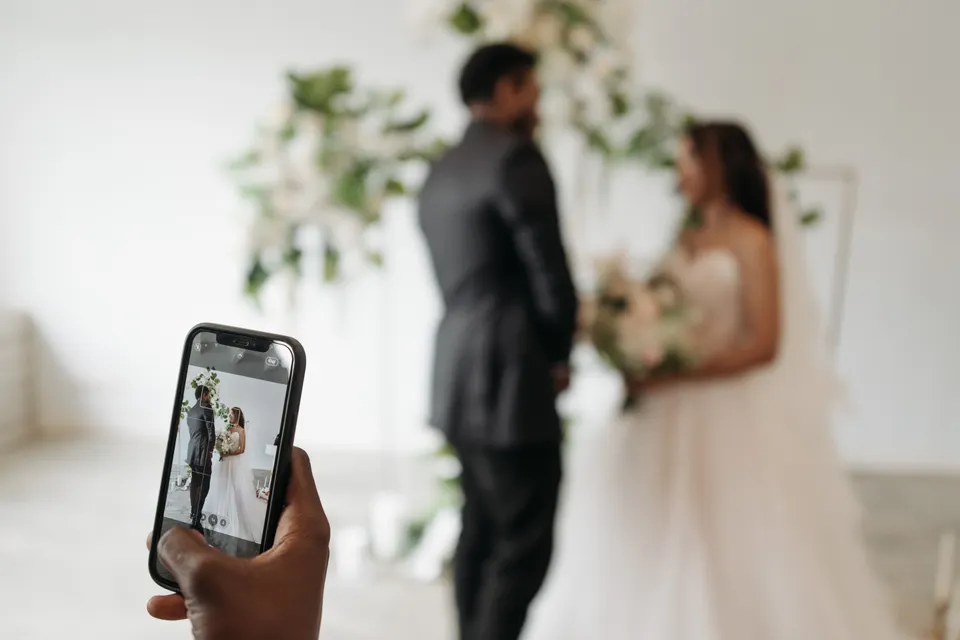
The best of both: mixing digital and paper
You don't have to choose one. Many couples now mix and match, and it often works better than either on its own.
- A small print run. Print 10 or 20 invitations for grandparents and close family. Send digital invitations to everyone else.
- Paper with a QR code. Print a simple card with a QR code that opens the online invitation and RSVP. Guests get something to hold and an easy way to reply.
- Digital save the date, paper invitation. Send a quick digital save the date early, then mail the formal invitation.
- Paper invitation, online details. Keep the printed invitation clean and put hotels, maps and the registry on your online page.
What about guests who aren't online?
Almost every guest list has a few. For them, you have options: print a few invitations, ask a family member to show them the invitation on their phone, or call them yourself and add their answer to your list. With an online RSVP, you can mark their reply yourself, so your totals stay correct.
Environmental impact
A paper invitation suite for 100 guests means several hundred pieces of card and envelopes, plus delivery. It's not a huge amount on its own, but for couples planning a lower-waste wedding, digital invitations are an easy win. If you do print, recycled paper and a smaller suite (invitation plus QR code, no reply card) cut most of the waste.
How to decide: five questions
If you ticked the first four, digital is a great fit. If you ticked the last one too, add a small print run. That combination covers almost every guest list.
What guests actually think
Couples often worry more about digital invitations than guests do. Most guests care about three things: that they feel personally invited, that they can find the details when they need them, and that replying is easy. A digital invitation can do all three better than paper. The address opens straight into a map, the schedule is always one tap away, and the RSVP takes a minute on a phone.
Where paper still wins is emotion. Opening an envelope with your name written by hand is a small, real pleasure. If that matters to your family, give it to the people who will treasure it most, and let everyone else enjoy the convenience. You'll find that very few guests feel short-changed either way.
A note on timing
Paper invitations need time: design proofs, printing, addressing, stamping and the post, which can take two to four weeks before they even arrive. Digital invitations can go out the day your details are final. If your engagement is short or your venue was booked late, that time saving alone can decide it.
The bottom line
Digital invitations win on cost, speed and RSVPs. Paper wins on keepsake value and tradition. For most couples, the answer is digital for everyone, a few printed copies for the people who'll treasure them, and an online RSVP for all.
Questions couples ask
Are digital wedding invitations tacky?
No. A well-designed digital invitation with personal wording and a private link per household is now common for every kind of wedding, including formal ones.
How much do digital wedding invitations cost?
Much less than paper. Many services charge one price for the whole wedding, and I Say I Do is free for up to 25 guests.
Can I send both paper and digital invitations?
Yes. Many couples print a few invitations for grandparents and close family and send digital invitations to everyone else, with one online RSVP for all.
How do older guests reply to a digital invitation?
A family member can help, you can take their answer by phone and add it yourself, or you can send them a printed card with a QR code.
Do digital invitations get lost in spam?
Sometimes. Sending through WhatsApp or text as well as email, and checking who hasn't replied after a few days, catches the few that go astray.
Make your invitation in minutes
Beautiful designs, an RSVP for each guest and automatic reminders. Free for up to 25 guests.
Start freeKeep reading
-
 23 listopada 2026 · 7 min read
Can you send wedding invitations by email, WhatsApp or text?
Yes, you can. How to send wedding invitations by email, WhatsApp and text so they feel personal, with message wording to copy and tips to avoid spam folders.
-
 23 listopada 2026 · 12 min read
Wedding hashtag ideas: free generator and 100+ examples
Create a unique wedding hashtag in seconds with our free generator, plus 100+ ideas by style, rules for making it readable, and where to share it with guests.
-
 20 listopada 2026 · 7 min read
How to collect wedding RSVPs online (meals, plus-ones and dietary needs)
What to ask on your wedding RSVP, how to handle plus-ones and children, and how to get meal choices and dietary needs without chasing guests.