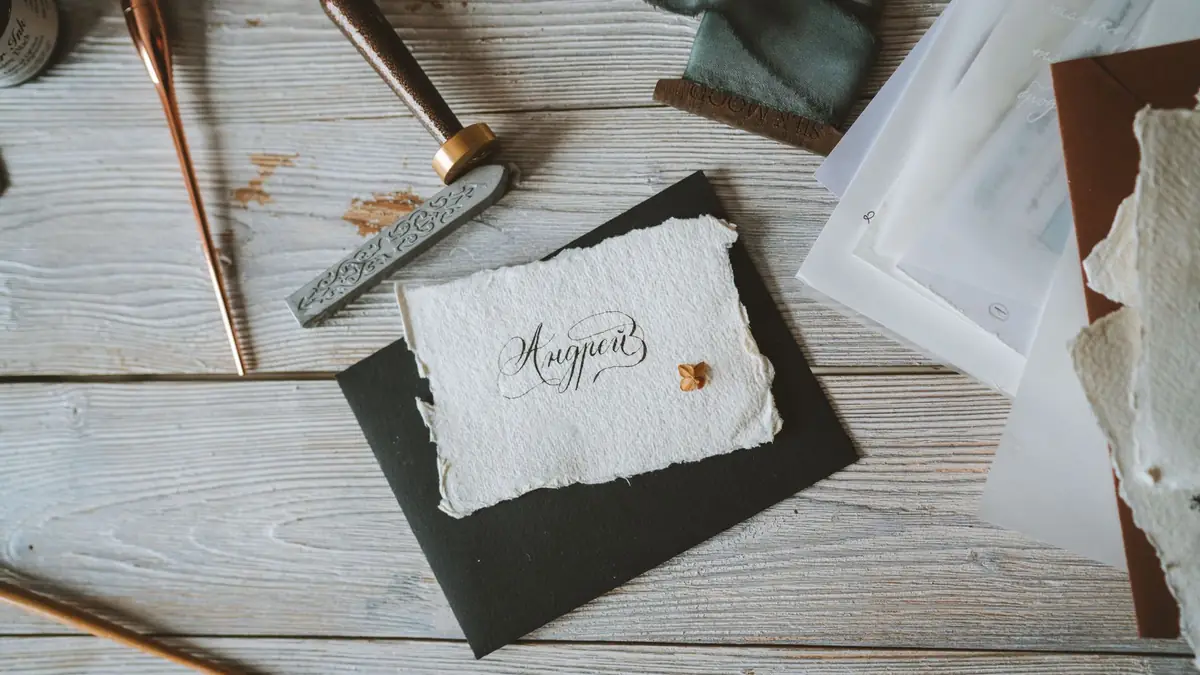
How to address wedding invitations: examples for every guest
The name on an invitation tells guests exactly who's invited, so it's worth getting right. Here's how to address wedding invitations for every kind of household, with examples for formal and modern styles, paper envelopes and online invitations.
In this article
- Before you start: gather the right information
- Formal or modern: choose a style and stick with it
- Married couples
- Unmarried couples and plus-ones
- Families and children
- Titles: doctors, judges, clergy and the military
- Widowed, divorced and single guests
- Outer and inner envelopes
- Writing the address itself
- Addressing online invitations
- Names from different cultures and languages
- Addressing the RSVP card and return envelope
- Who should address the invitations?
- Common addressing mistakes
- A quick checklist before you send
- The bottom line
- Questions couples ask
Addressing wedding invitations sounds simple until you sit down with the guest list. Is it "Mr. and Mrs. John Smith" or "Sarah and John Smith"? What if they have different last names? Where do the children's names go? How do you address a doctor, a widow, or a couple who aren't married? And if you're sending invitations online, does any of this still matter?
It does, because the way you address an invitation does a quiet but important job: it tells each guest exactly who is invited. This guide walks through every common situation, with examples you can copy, for both traditional paper envelopes and online invitations.
Before you start: gather the right information
Most addressing mistakes come from missing information rather than bad etiquette. Before you write a single envelope or send a single link, make sure your guest list has, for each household:
Every person invited, with their full first and last names.
Dr., Judge, military rank, Rev. and so on, if you're using formal style.
Married, engaged, living together, or dating. It changes the wording.
A postal address for paper invitations; an email or mobile number for online ones.
If you haven't collected these yet, our guide to building the wedding guest list has tips for gathering details without the headache. It's much easier to ask "How would you like your name written?" once, early on, than to guess.
Formal or modern: choose a style and stick with it
There are two broad styles. Formal style uses titles (Mr., Mrs., Ms., Dr.) and full names. Modern style uses first and last names, often without titles. Neither is more correct. Choose the one that matches the tone of your wedding, and use it for every guest, so nobody feels treated differently.
| Household | Formal | Modern |
|---|---|---|
| Married couple, same last name | Mr. and Mrs. James Patel | Priya and James Patel |
| Married couple, different last names | Ms. Priya Shah and Mr. James Patel | Priya Shah and James Patel |
| Single guest | Ms. Olivia Grant | Olivia Grant |
| Single guest with a plus-one | Ms. Olivia Grant and Guest | Olivia Grant and Guest |
| Family with children | Mr. and Mrs. James Patel, Aria and Dev | The Patel Family |
Married couples
Same last name
The traditional formal form uses the husband's full name: "Mr. and Mrs. James Patel". Many couples now prefer to include both first names, which is equally correct and feels more personal.
Mr. and Mrs. James Patel
or
Priya and James Patel
or
Mrs. Priya Patel and Mr. James Patel
Different last names
Write both full names on one line, joined by "and". If it doesn't fit, put each name on its own line, without the "and". Traditionally, the woman's name comes first, but you can also list the person you know best first.
Ms. Priya Shah and Mr. James Patel
or
Priya Shah and James Patel
Same-sex couples
Use both full names, and list whoever you're closer to first, or go alphabetically. If they share a last name, you can write "Mr. and Mr. Daniel Lee" or "Ms. and Ms. Lee" in formal style, or "Daniel and Marcus Lee" in modern style. If you're unsure which format they prefer, use both full names; it's always correct.
Mr. Daniel Lee and Mr. Marcus Lee
or
Daniel and Marcus Lee
When one partner has a title
Professional titles go with the person who holds them. If the wife is a doctor and the husband isn't, list her first: "Dr. Priya Patel and Mr. James Patel". If both are doctors, "The Doctors Patel" or "Drs. Priya and James Patel" both work.
Unmarried couples and plus-ones
Couples who live together
Send one invitation to the household, with both names on separate lines (or on one line joined by "and"). List the person you know better first.
Ms. Olivia Grant
Mr. Ethan Brooks
Couples who live apart
Traditionally, each person receives their own invitation at their own address. In practice, many couples send one invitation to the person they know better, with both names on it. Either is fine; just make sure both names appear.
Guests with a plus-one
If you know the name of the guest's partner, use it. It's more welcoming than "and Guest". If you don't know it, ask. If the guest is single and may bring anyone, write "and Guest".
Mr. Ethan Brooks and Guest
For more on plus-ones and adults-only invitations, including how to word replies to guests who ask to bring someone, see our guide to plus-one and adults-only wording.
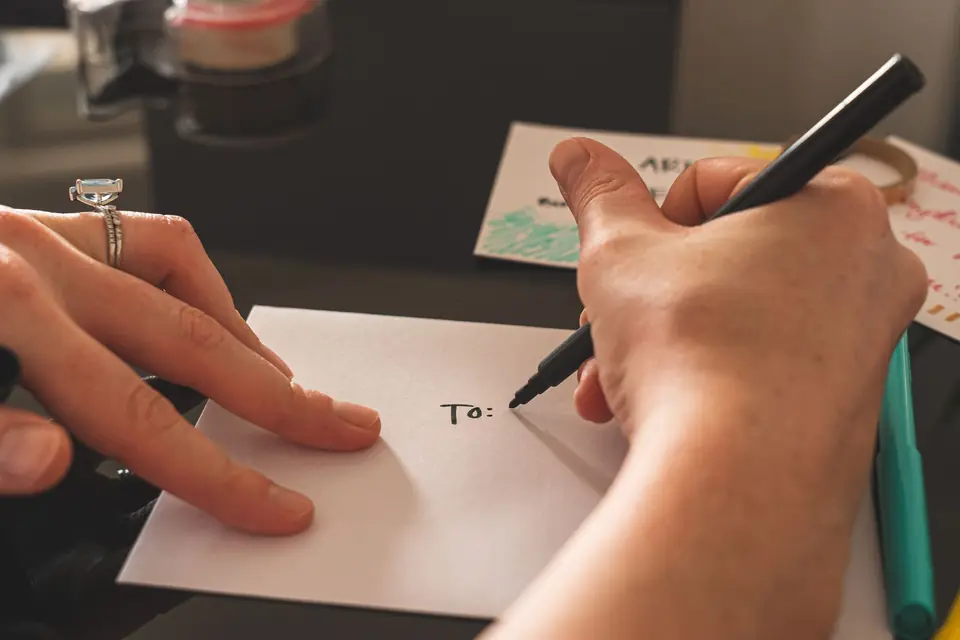
Families and children
How you address a family tells them whether the children are invited, so this is one of the most important parts to get right.
Young children under 18
On a formal invitation with two envelopes, the parents' names go on the outer envelope, and the children's first names go on the inner envelope, under their parents'. With a single envelope, list the parents first, then the children's first names in order of age.
Mr. and Mrs. James Patel
Aria and Dev
"The Patel Family" is a friendly option for casual weddings, but it can be ambiguous: does it include the grown-up son who lives at home? Does it include a grandparent? If there's any chance of confusion, name everyone.
Adult children
Children aged 18 and over should ideally get their own invitation, even if they still live at home. If they live with their parents, you can include them on the same invitation, named in full on their own line.
Adults-only weddings
If children aren't invited, address the invitation only to the adults. Don't write "Adults only" on the envelope. You can add a kind note on your website or invitation page. Our wedding invitation etiquette guide has gentle wording for this.
Titles: doctors, judges, clergy and the military
For formal invitations, use professional titles for guests who hold them. A few common examples:
| Guest | Formal example |
|---|---|
| Medical doctor | Dr. Priya Patel |
| Doctor married to a non-doctor | Dr. Priya Patel and Mr. James Patel |
| Both doctors | The Doctors Patel or Drs. Priya and James Patel |
| Judge | The Honorable Maria Lopez |
| Member of the clergy | The Reverend Thomas Hale |
| Military officer | Captain Sarah Reid, United States Army |
| Elected official | The Honorable (first name) (last name) |
Rules for academic doctors (PhDs) vary. Many people use "Dr." only for medical doctors on social invitations, while others use it for anyone with a doctorate. When in doubt, use the title the guest uses for themselves.
Widowed, divorced and single guests
- A widow may still use her late husband's name ("Mrs. James Patel") or her own first name ("Mrs. Priya Patel"). If you know her preference, use it; otherwise, her own first name is a safe and modern choice.
- A divorced woman usually uses "Ms." with her own first name and whichever last name she now uses.
- A single guest is simply "Mr. Ethan Brooks" or "Ms. Olivia Grant", plus "and Guest" if you're offering a plus-one.
Outer and inner envelopes
Very formal paper invitations sometimes use two envelopes. The outer envelope carries the full names and mailing address. The inner envelope, unsealed, carries just the names in a more personal form, and tells guests exactly who's invited, including children.
| Household | Outer envelope | Inner envelope |
|---|---|---|
| Married couple | Mr. and Mrs. James Patel | Mr. and Mrs. Patel |
| Family with children | Mr. and Mrs. James Patel | Mr. and Mrs. Patel Aria and Dev |
| Close family | Mr. and Mrs. James Patel | Aunt Priya and Uncle James |
| Single guest with plus-one | Ms. Olivia Grant | Ms. Grant and Guest |
Most couples today use a single envelope, which is perfectly correct. In that case, the names on the single envelope must include everyone invited.
Writing the address itself
For formal invitations, spell out words in full: Street, Avenue, Road, Apartment, and the state or province. Write numbers under 20 in words if you're going very formal ("Twelve Oak Street"), though most couples now use numerals. Use the postal code or ZIP code, and keep the layout clean and centred.
- Line 1: names
The guests' names in your chosen style.
- Line 2: street address
House number and street name, written out in full.
- Line 3: apartment or unit
On its own line, if there is one: "Apartment 4B".
- Line 4: city, state or province, postal code
"Toronto, Ontario M5V 2T6" or "Austin, Texas 78701".
- Return address
On the back flap of the envelope, in the same style.
Addressing online invitations
With online invitations there are no envelopes, but the same principles apply. The name on the invitation still tells guests who's invited, and the RSVP should let them answer only for those people.
The easiest way to keep this right is to set up your guest list by household. Each household gets one invitation, which lists each person by name. Couples, children and plus-ones are clear, and the RSVP asks about each person individually. With I Say I Do, each household gets its own personal link, the greeting uses the names you entered, and guests reply for each person in their party, with meal choices and dietary needs per person.
| What | Paper | Online |
|---|---|---|
| Names | On the envelope | On the invitation itself |
| Who's invited | Shown by the names | Shown by the names, and the RSVP lists each person |
| Children | Inner envelope or named on one envelope | Named in the household |
| Plus-one | "and Guest" | An optional plus-one in the RSVP |
| Mistakes | Reprint the envelope | Edit and resend the link |
Names from different cultures and languages
North American weddings bring together families from all over the world, and not every name fits the "first name, last name" pattern. A few things to keep in mind:
- Two family names. Many Spanish-speaking and Portuguese-speaking guests use two surnames, such as "Ana María López García". Write the full name as they write it, rather than shortening it to fit the envelope.
- Family name first. In Chinese, Korean, Japanese, Vietnamese and Hungarian naming, the family name often comes first. Many guests living in North America reverse the order in English; others don't. Use the form they use themselves.
- No family name, or a shared one. Some South Asian and Indonesian names don't follow a fixed surname pattern, and spouses may not share a surname at all. Writing both full names is always safe.
- Accents and special characters. Keep them: "Zoë", "José", "Françoise", "Łukasz". Leaving them off is like misspelling the name.
- Honorifics. In some families, older relatives are addressed with a respectful title, like "Shri and Smt." in Hindi or "Don and Doña" in Spanish. On a bilingual invitation these can be lovely; on an English-only one, standard titles are fine.
For invitations in two languages, our guide to bilingual wedding invitations covers names, order and layout, and our Indian wedding invitation wording guide covers the honorifics and family names often used in Indian invitations.
Addressing the RSVP card and return envelope
If you're sending paper reply cards, the reply envelope should be pre-addressed and stamped. Address it to whoever is collecting the replies: usually the couple, or the hosts if parents are hosting. Use the same style as the rest of the invitation.
Many couples number the back of each reply card in pencil and keep a matching numbered list. If a card comes back without a name (it happens more often than you'd think), you'll still know whose it is. With online RSVPs, this isn't needed: each household's link is already connected to its names, so every reply arrives with the right household attached. Our guide to collecting RSVPs online explains how.
Who should address the invitations?
Addressing a hundred envelopes by hand takes longer than most couples expect, often several evenings. You have a few options:
Personal and free. Split the list, put on some music, and do a few each evening.
Someone with beautiful handwriting is often happy to help. Give them a typed list to copy from.
Ideal for formal weddings. Book early and send them a clean, checked list.
Many stationers print addresses directly on the envelope in a matching font.
Whichever you choose, prepare a single, clean list first, checked for spellings, titles and postal codes. It's the list you'll use again for thank-you notes.
Common addressing mistakes
| Mistake | Better |
|---|---|
| Using nicknames on formal invitations | Full first names: "Robert", not "Bobby" |
| "and Family" when you mean only some of the family | Name each person who's invited |
| Leaving off a spouse or long-term partner | Always include them, by name |
| Mixing formal and modern styles | Pick one style for every guest |
| Abbreviating "St." or "Apt." on formal envelopes | Write "Street" and "Apartment" in full |
| Guessing at titles or spellings | Ask: it's better than getting a name wrong |
When in doubt, use the person's full name the way they write it themselves.
A quick checklist before you send
The bottom line
Addressing wedding invitations correctly is really about two things: respect for each guest's name, and clarity about who's invited. Choose a style, apply it consistently, name everyone who's included, and when you're not sure, ask. Guests notice when their names are written with care, and they notice even more when the invitation makes it obvious who's coming.
If you'd like to skip the envelopes, the stamps and the handwriting cramp, online invitations make this part easy. Set up your guests by household once, and the same list handles your save the dates, invitations, RSVPs and reminders. It's free for up to 25 guests, and larger weddings pay once: US$19 or CA$25 for 75 guests, US$39 or CA$49 for 200, and US$79 or CA$99 for up to 1,000. Have a look at the designs to get started.
Questions couples ask
How do you address a wedding invitation to a married couple?
Traditionally "Mr. and Mrs. James Patel". A modern alternative that's equally correct is "Priya and James Patel". If they have different last names, write both full names: "Priya Shah and James Patel".
Whose name goes first on a wedding invitation envelope?
Traditionally the woman's name comes first when both names are written out. For any couple, you can also list the person you know better first, or go alphabetically.
How do you address a wedding invitation to a family?
List the parents first, then the children's first names in order of age. "The Patel Family" works for casual weddings, but naming everyone avoids confusion.
Do adult children need their own wedding invitation?
Ideally yes, for anyone 18 or over. If they live with their parents, you can include them on the same invitation, named in full on their own line.
How do I address an invitation with a plus-one?
Use the partner's name if you know it. If not, write "and Guest" after the guest's name, for example "Ms. Olivia Grant and Guest".
Do I need an inner and outer envelope?
No. Two envelopes are a tradition for very formal invitations. A single envelope is perfectly correct, as long as it names everyone who's invited.
How do you address an online wedding invitation?
The same way as paper: use each guest's name and name everyone in the household who's invited. Set up the guest list by household so the RSVP covers exactly those people.
Should I write out street names in full?
For formal invitations, yes: Street, Avenue, Apartment and the full state or province. For casual invitations, standard abbreviations are fine.
Make your invitation in minutes
Beautiful designs, an RSVP for each guest and automatic reminders. Free for up to 25 guests.
Start freeKeep reading
-
 November 23, 2026 · 14 min read
Wedding invitation etiquette: the complete guide to the dos and don'ts
Wedding invitation etiquette for today's couples: who to invite, who hosts, timing, plus-ones, children, registry, dress code, RSVPs and sending invitations online.
-
 November 23, 2026 · 7 min read
How to word plus-ones and adults-only weddings politely
Polite wording for plus-ones, no plus-ones and adults-only weddings, how to decide who gets a guest, and how to handle the awkward questions kindly.
-
 November 23, 2026 · 13 min read
Wedding dress codes explained, from black tie to casual
Every wedding dress code explained: white tie, black tie, black tie optional, cocktail, semi-formal, beach and casual, plus how to put a dress code on your invitation.