Ten artykuł jest też dostępny w języku: polski. Indian wedding invitation wording for every function →
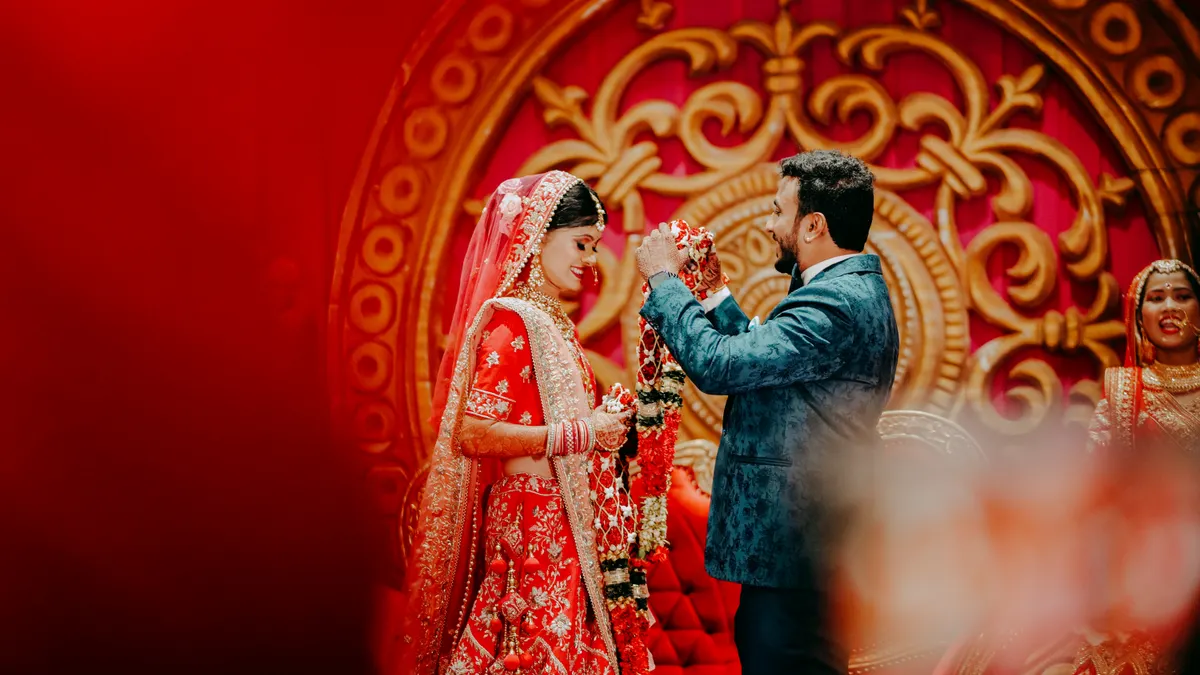
Indian wedding invitation wording for every function
An Indian wedding invitation often covers several functions over a few days, each with its own mood, dress code and guest list. Here's how to word each part, with examples to adapt to your family's traditions.
In this article
An Indian wedding is rarely a single event. Depending on the family's region and traditions, there may be a roka or engagement, a haldi, a mehndi, a sangeet, the baraat, the ceremony with its pheras, and a reception, often over three days or more. Each function has its own mood, its own dress code and often its own guest list.
That makes the invitation more than a card. It's a schedule, a guide and a blessing, all in one. Guests from the family will know what to expect; friends and colleagues who have never been to an Indian wedding will rely on it completely. This guide covers the traditional structure, wording for every function, and how to invite each guest to just their events.
The structure of a traditional invitation
- OpeningBlessing or invocation
A prayer to Lord Ganesha, a verse from the Guru Granth Sahib, or a line meaningful to your family.
- HostsThe families
Often the parents of the bride or groom, sometimes the grandparents.
- InvitationThe request
"Request the pleasure of your company" or "cordially invite you".
- The coupleNames and parentage
Traditionally the couple's names with their parents' names.
- FunctionsEach event
Name, date, time, venue and dress code.
- ClosingRegards
"With best compliments from" the family, often naming elders.
The opening
Many Hindu invitations begin with a short invocation to Lord Ganesha, the remover of obstacles, such as "Shri Ganeshaya Namah", often with a small illustration. Sikh invitations may open with "Ik Onkar" or a line of Gurbani; Muslim invitations often begin with "Bismillah ir-Rahman ir-Rahim". Choose what your family uses, or skip it for a modern invitation.
With the blessings of the Almighty
Mr. and Mrs. Rajesh Sharma
request the pleasure of your company
at the wedding of their daughter
Priya
with
Arjun
son of Mr. and Mrs. Vikram Mehta
Together with their families
Priya and Arjun
invite you to join them
in celebrating their wedding
With the blessings of
Smt. Kamala Devi and Late Shri Ram Prasad Sharma
Mr. and Mrs. Rajesh Sharma
cordially invite you to the wedding of their daughter
Wording for each function
Haldi
A joyful, messy morning where turmeric paste is applied to the couple for luck and glow.
Join us for the haldi ceremony.
Wear yellow, and clothes you don't mind
getting a little turmeric on!
Mehndi
An afternoon of henna, music and food, traditionally for the bride's side, now often for everyone.
Join us for an afternoon of henna,
music and colour as we celebrate
Priya's mehndi.
Sangeet
An evening of music, dance performances and a lot of fun, often with friends and family preparing routines.
Get ready to dance!
Join us for an evening of music
and performances at the sangeet.
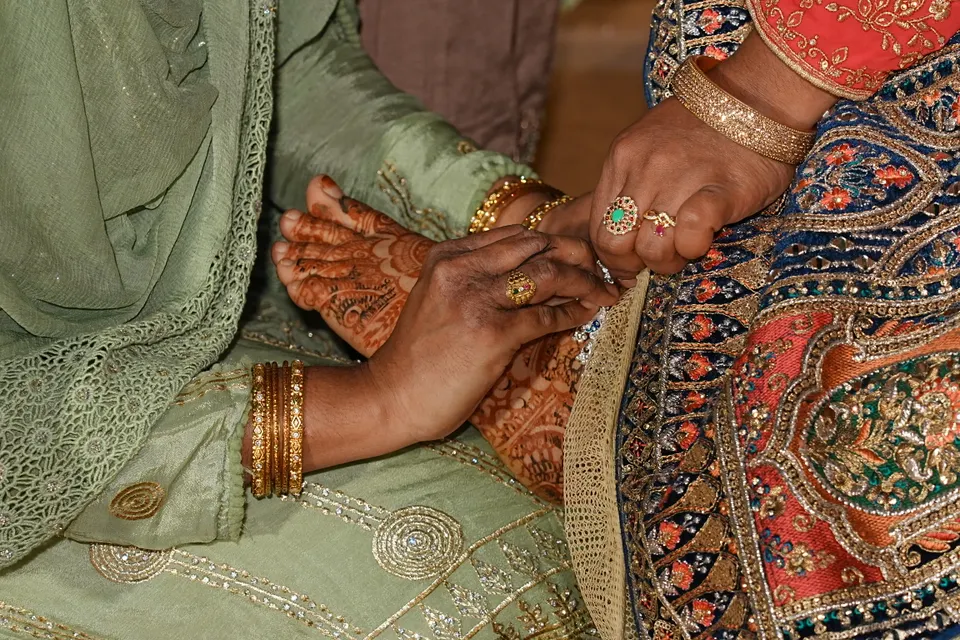
Baraat and ceremony
The groom's procession, then the wedding itself: the jaimala (exchange of garlands) and the pheras around the sacred fire.
We request your gracious presence
at the wedding ceremony.
Baraat at 9 AM,
followed by the pheras at 10:30 AM.
Reception
The party celebrating the newlyweds, often the largest event, with dinner and dancing.
Please join us for dinner and dancing
as we celebrate the newlyweds.
Dress codes for each function
Guests, especially those new to Indian weddings, really appreciate a hint for each function. Add it under each event, not all together at the end.
| Function | Dress code | Colours |
|---|---|---|
| Haldi | Casual Indian or comfortable clothes | Yellow |
| Mehndi | Festive, light Indian wear | Green, bright colours |
| Sangeet | Glamorous, ready to dance | Anything sparkly |
| Ceremony | Formal Indian wear, or suits and dresses | Avoid red (the bride's), white and black |
| Reception | Formal Indian or Western evening wear | Jewel tones |
"Indian wear welcome, but not required" puts everyone at ease.
Sangeets and baraats involve a lot of dancing, sometimes outdoors.
For a gurdwara ceremony, mention that guests should cover their heads.
Inviting guests to different functions
Most couples invite close family to every function and a wider circle to the ceremony and reception. Printed invitations handle this with extra insert cards for each function, placed only in the envelopes of guests who are invited. It looks beautiful, but it's easy to make mistakes with hundreds of envelopes.
Online, it's simpler: each guest's personal link shows only the functions they're invited to, and they reply for each one. Your caterers get accurate numbers for every meal, and nobody sees an event they weren't invited to.
Closing lines
Your presence and blessings
will make our celebration complete.
With best compliments from
the Sharma and Mehta families
Traditionally, invitations end with a line naming the families or the elders sending their regards. Some families add the children of the family, a playful line called "Mere mama ki shaadi mein zaroor aana" (do come to my uncle's wedding). It's a sweet touch that guests love.
A good Indian wedding invitation is a blessing, a schedule and a welcome, all in one.
Languages
Many Indian families span several languages and countries. Grandparents may prefer Hindi, Punjabi, Gujarati or Tamil; cousins abroad may read only English. Consider a bilingual invitation, or online invitations that let each guest read in their language. I Say I Do offers Hindi and English, and guests can switch with one tap.
Practical details guests need
Beyond the wording, a few practical details make a big difference for guests at a multi-day Indian wedding. Many will be travelling, some will be new to the traditions, and everyone will want to know where to be and when.
- Venues and travel times. If functions are in different places, give each address with a map link and an idea of travel time between them.
- Food. Mention whether meals are vegetarian, and whether alcohol is served, so guests know what to expect.
- Accommodation. Share hotel blocks and any group rate codes, especially for out-of-town guests.
- Shoes and seating. For a temple or gurdwara ceremony, guests may remove shoes and sit on the floor. A gentle note helps elderly guests prepare.
- Timings that matter. If the muhurat is fixed, say so clearly.
Gifts and shagun
Gifts are traditionally not mentioned on the main invitation. Many guests give shagun (cash in an envelope), often in an amount ending in 1 for good luck, such as 101, 501 or 1,001. If you'd prefer something specific, mention it gently on your invitation page rather than on the card itself.
Questions couples ask
What is written on an Indian wedding invitation?
Usually an opening blessing, the hosting families, the couple's names with their parents' names, each function with its date, time, venue and dress code, and a closing line from the families.
Do I need to invite everyone to every function?
No. Close family is often invited to everything, while friends and colleagues are invited to the ceremony and reception. Make sure each invitation shows only that guest's functions.
What should guests wear to a mehndi?
Festive, light Indian wear or bright colours, often green. Saying "Indian wear welcome, but not required" helps guests who don't own any.
Which colours should guests avoid at an Indian wedding?
Red is usually the bride's colour, and white and black are often avoided at the ceremony. Mention it kindly in the dress code.
How do I explain functions to guests who haven't been to an Indian wedding?
Add one friendly line to each function, such as "An afternoon of henna, music and colour", and a dress code.
When should Indian wedding invitations be sent?
Send save the dates 9 to 12 months ahead if guests need to travel, and invitations 10 to 12 weeks before the first function, earlier for guests coming from abroad.
Make your invitation in minutes
Beautiful designs, an RSVP for each guest and automatic reminders. Free for up to 25 guests.
Start freeKeep reading
-
 18 listopada 2026 · 7 min read
Inviting guests to a multi-day or multicultural wedding
How to invite guests to several wedding events, such as a mehndi, sangeet, ceremony and reception, without confusing anyone.
-
 23 listopada 2026 · 7 min read
Bilingual wedding invitations: wording and tips for two languages
How to write a bilingual wedding invitation for families who speak different languages, with layout tips and wording in English, French, Spanish and Portuguese.
-
 23 listopada 2026 · 12 min read
How to write wedding vows: a simple method, examples and a vow builder
Write wedding vows you'll be proud to read, with a 5-part structure, original examples, a free vow builder, a vow-style quiz and tips for reading them aloud.