
How to word plus-ones and adults-only weddings politely
Who gets a plus-one, and can the kids come? These are the two questions that cause the most awkward conversations. Here's how to decide, what to write, and what to say when someone asks.
In this article
Every wedding has a limit. It might be the venue's capacity, the catering budget or simply how many people you want around you on the day. Plus-ones and children are where that limit becomes personal. Your friend wants to bring the person she started dating last month. Your cousin assumes his three kids are invited. Your colleague asks, a little too casually, whether there's room for one more.
None of this means anyone is being rude. People just don't know what you've decided. The kindest thing you can do is decide early, apply the rule consistently, and make the invitation itself say who is invited, so nobody has to ask.
Deciding who gets a plus-one
There's no universal rule, but most couples follow some version of this. Whatever you decide, write it down and stick to it; exceptions are where hurt feelings start.
| Guest | Usually gets a plus-one? |
|---|---|
| Married or engaged | ✓ |
| Living together or long-term partner | ✓ |
| Wedding party member | ~ |
| Guest who won't know anyone else | ~ |
| Single, or dating casually | ✕ |
| Colleagues | ✕ |
How to show who is invited
On paper, the names on the envelope tell guests who is invited. "Mr. and Mrs. Patel" means two people. "The Patel Family" means children too. "Ms. Jordan Lee and Guest" means a plus-one. The trouble is that many guests don't read envelopes that carefully.
Online, it's much clearer. Each household's link lists the names of everyone invited, and the RSVP form asks only about those people. If a guest has a plus-one, the form has a place for their name. If not, there's no box to add anyone. Nobody has to ask, and nobody adds three extra people by accident.
- Enter each household
List every invited person by name. Children included only if they're invited.
- Mark plus-ones
Give a plus-one only to the guests who get one.
- Send personal links
Each household sees only its own names.
- Collect names
Guests with a plus-one fill in their guest's name for the seating plan.
Wording for a plus-one
Ms. Jordan Lee and Guest
We've saved two seats for you.
Please tell us your guest's name when you reply.
Wording when there are no plus-ones
You don't need to announce "no plus-ones". Address the invitation to the guest alone and let the RSVP form show one seat. If you'd like to say something, keep it warm and put it on your invitation page or details card, not the main invitation.
We have reserved one seat in your honour.
Because of our venue's size, we're only able to invite the guests named on the invitation. Thank you for understanding.
Wording for an adults-only wedding
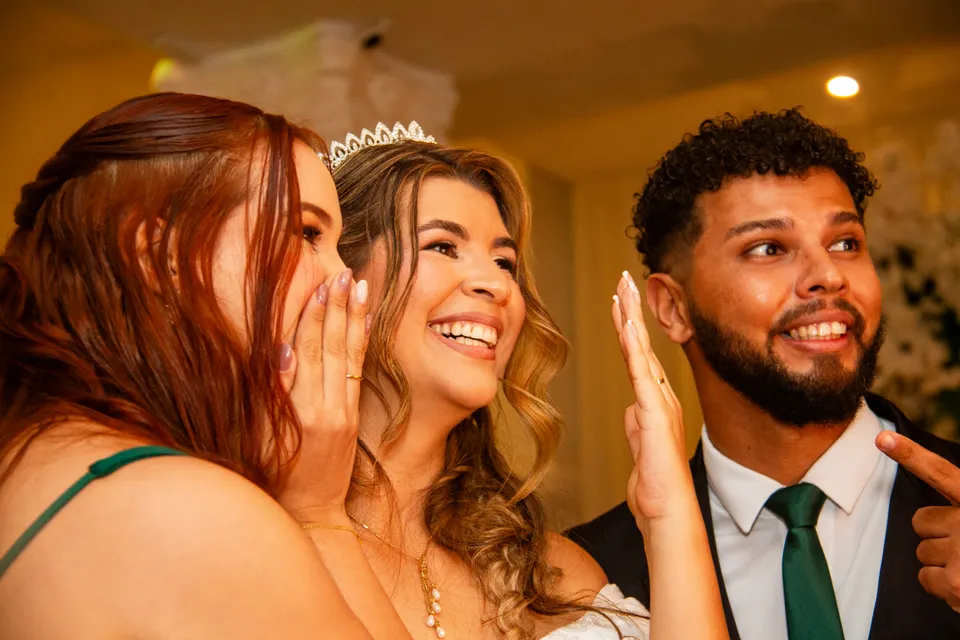
Adults-only weddings are common and perfectly acceptable. Parents will need time to arrange childcare, so make it clear early, and kindly.
We love your little ones, but this will be an adults-only celebration.
We hope you enjoy a night off!
Our wedding will be an adults-only celebration.
We love your children, but we've chosen to keep our wedding adults-only, apart from our immediate family.
Making exceptions for some children
Many couples invite only the children of immediate family, or children in the wedding party (flower girls, ring bearers). That's fine, as long as the rule is clear and consistent. Say so: "Apart from the children in our wedding party, our celebration will be adults-only." Babies still nursing are often a reasonable exception too.
When someone asks anyway
Someone will ask. When they do, answer warmly, briefly and the same way for everyone. You don't owe a long explanation, and a short answer is kinder than a complicated one.
We'd love to meet them one day! We're keeping the wedding small, so we can only invite the people on the invitation. We hope you understand.
We adore your kids! We've decided to keep the wedding adults-only, and we really hope you can still make it. We'd love you to have a night off with us.
Decide early, apply it to everyone, and let the invitation do the explaining.
The tricky cases
If a guest gets engaged after invitations go out, invite the fiancé(e). It's the kind thing to do.
A guest flying in who won't know anyone may deserve a plus-one, even if single.
A baby in arms is often a reasonable exception to an adults-only rule.
Many couples give the wedding party plus-ones, as a thank-you.
Keeping track of it all
The hardest part of plus-ones is keeping track: who has one, who has named their guest, who still needs to reply. A guest list that records each household's seats and fills in guest names as they reply saves hours of cross-checking. When it's time for the seating plan, every name is already there.
Plus-ones and the seating plan
Plus-ones affect more than numbers. Each one is a person to seat, feed and welcome. Seat plus-ones with their partner, of course, and think about the rest of the table: a guest who knows nobody else will be much happier at a table of friendly, chatty people than at the edge of a family reunion.
Ask for your guests' plus-one names by the RSVP deadline. You'll need them for place cards, the seating chart and, if your venue requires it, the security or guest list at the door. "Guest of Jordan" on a place card is functional, but a real name is warmer.
Changing your mind
Budgets and venues change. If you find you have room after the first round of replies, you can offer a plus-one to guests who didn't have one. Do it personally, and give them plenty of time. Going the other way, taking away a plus-one already offered, is much harder; avoid it unless you have no choice, and if you must, explain it in person.
Whatever you decide, write your rules down and share them with anyone who might be asked, especially parents and the wedding party. When everyone gives the same kind answer, nobody feels singled out.
A note for guests
If you're reading this as a guest rather than a couple: the names on your invitation are the people invited. If you're unsure, it's fine to ask the couple once, politely, but take their answer graciously and don't ask again. If you can't attend without your partner or children, simply decline with warm wishes. Couples understand, and they'll remember that you made it easy for them.
Questions couples ask
Do I have to give every guest a plus-one?
No. Most couples give plus-ones to married, engaged and long-term couples, and sometimes to guests who won't know anyone else. Apply your rule consistently.
How do I say no plus-ones politely?
Address the invitation to the guest alone and let the RSVP show one seat. If you need words, use "We have reserved one seat in your honour".
Is an adults-only wedding rude?
No. It's common and acceptable. Tell parents early, kindly, and consider sharing babysitter suggestions.
Where do I say the wedding is adults-only?
On the details card or invitation page, not on the main invitation wording, and by addressing the invitation to the adults only.
What if a guest RSVPs for someone who wasn't invited?
Contact them kindly and personally, explain you're keeping the wedding small, and thank them for understanding.
Should the wedding party get plus-ones?
Many couples give members of the wedding party a plus-one as a thank-you, especially if they'll be busy with duties all day. It isn't required, but it's a kind gesture if your budget allows.
Can I invite some children but not others?
Yes, as long as the rule is clear, such as immediate family only or children in the wedding party. Apply it consistently and explain it the same way to everyone who asks.
Make your invitation in minutes
Beautiful designs, an RSVP for each guest and automatic reminders. Free for up to 25 guests.
Start freeKeep reading
-
 November 23, 2026 · 14 min read
Wedding invitation etiquette: the complete guide to the dos and don'ts
Wedding invitation etiquette for today's couples: who to invite, who hosts, timing, plus-ones, children, registry, dress code, RSVPs and sending invitations online.
-
 November 23, 2026 · 14 min read
How to address wedding invitations: examples for every guest
How to address wedding invitations and envelopes: married couples, different last names, doctors, families, plus-ones, widowed guests and online invitations.
-
 November 23, 2026 · 12 min read
How to make a wedding seating chart (without the family drama)
Make your wedding seating chart step by step: a free table calculator, who sits where, tricky family situations, escort cards vs charts, and a simple timeline.