この記事は次の言語でも読めます: 日本語. Wedding dress codes explained, from black tie to casual →

Wedding dress codes explained, from black tie to casual
"Black tie optional" and "cocktail attire" mean something specific, but guests often aren't sure what. Here's what each wedding dress code means, what to wear, and how couples can word theirs so nobody shows up in a tuxedo to a beach party.
In this article
- The wedding dress codes at a glance
- White tie
- Black tie
- Black tie optional, and "formal"
- Cocktail attire, and "semi-formal"
- Dressy casual and smart casual
- Casual
- Themed and setting-based dress codes
- For guests: the general rules
- For couples: how to choose your dress code
- The wedding party, parents and children
- How to put the dress code on your invitation
- Dress codes and the rest of your invitation
- Your questions, answered quickly
- Questions couples ask
A dress code is one of the smallest lines on a wedding invitation and one of the most read. Guests look at it before they look at almost anything else, because it answers a practical question: what am I going to wear? A clear dress code helps guests feel comfortable, makes your photos look the way you imagined, and saves you from a dozen text messages asking whether jeans are okay.
This guide is for both sides. If you're a couple, it explains each dress code so you can choose the right one and word it well. If you're a guest, it tells you what each term means in practice, for suits, dresses and everything in between. The descriptions reflect common usage in the United States and Canada; they're guidelines rather than strict rules, and the couple's own instructions always come first.
The wedding dress codes at a glance
| Dress code | Suits and menswear | Dresses and womenswear |
|---|---|---|
| White tie | Black tailcoat, white bow tie, white waistcoat, formal shirt | Floor-length evening gown |
| Black tie | Tuxedo, black bow tie, dress shoes | Floor-length gown, or a very elegant cocktail dress or formal separates |
| Black tie optional / Formal | Tuxedo or a dark suit and tie | Gown, elegant cocktail dress or dressy jumpsuit |
| Cocktail / Semi-formal | Suit and tie (tie sometimes optional) | Knee-length or midi dress, dressy jumpsuit or separates |
| Dressy casual | Trousers and a collared shirt; blazer optional | Sundress, skirt and blouse, or smart trousers |
| Casual | Chinos or linen trousers, short or long sleeves | Simple dress, skirt or trousers |
Two terms you'll often see, "formal" and "semi-formal", don't have perfectly fixed meanings. Most people read "formal" as close to black tie optional and "semi-formal" as close to cocktail. If you're a couple using them, a short note helps.
White tie
White tie is the most formal dress code there is, and it's rare at weddings. You'll mostly see it at state dinners, some galas and very traditional evening weddings.
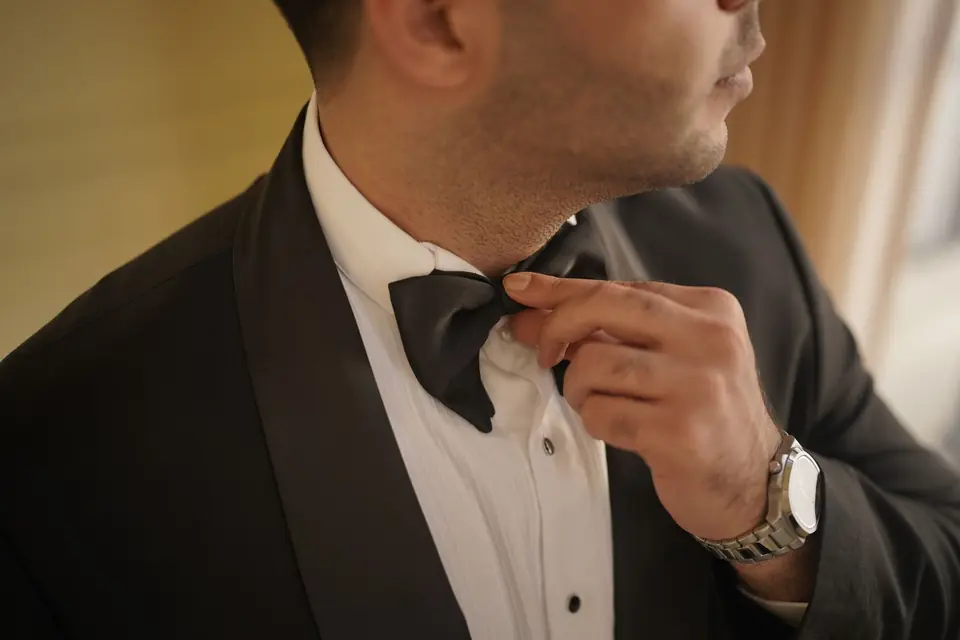
What to wear: for menswear, a black tailcoat, a white wing-collar shirt, a white bow tie, a white waistcoat and patent leather shoes. For womenswear, a floor-length evening gown, often with gloves and fine jewellery.
Black tie
Black tie is the classic formal evening dress code. It signals an elegant event, usually starting at six o'clock or later.
What to wear: a tuxedo (dinner suit) with a black bow tie, a white dress shirt and polished black shoes. A dark midnight blue tuxedo is also correct. For dresses, a floor-length gown is traditional; a very elegant cocktail dress, dressy separates or a formal jumpsuit can work too, especially in more modern crowds.
Black tie optional, and "formal"
Black tie optional means the event is formal and some guests (often the wedding party) will wear tuxedos, but a dark suit is perfectly acceptable. It's one of the most popular dress codes for evening weddings, because it feels elegant without asking everyone to rent formalwear.
What to wear: a tuxedo, or a dark suit (navy, charcoal or black) with a tie and dress shoes. For dresses, a floor-length gown, an elegant cocktail dress, a dressy jumpsuit or formal separates.
"Formal attire" on an invitation usually means much the same: dress for an elegant evening, but a tuxedo isn't required.
When in doubt, dress one step more formal. It's always easier to take off a tie than to find one.
Cocktail attire, and "semi-formal"
Cocktail attire is the most common wedding dress code in the US and Canada. It's polished but not as formal as black tie, and it works for both daytime and evening weddings.
What to wear: a suit, usually with a tie, though some couples say the tie is optional. Lighter colours and patterns are fine for daytime and summer. For dresses, a knee-length or midi dress, a dressy jumpsuit, or elegant separates. Floor-length gowns are usually more than needed, but not wrong at an evening event.
"Semi-formal" generally means the same thing. For an evening event, lean towards darker colours; for daytime, lighter colours and fabrics are perfect.
Lighter suits and colours, floral or patterned dresses, lighter fabrics.
Darker suits, a tie, and dressier fabrics like satin or velvet.
A wool suit, a wrap or tailored coat, closed shoes.
Linen or cotton suits, breathable dresses, and comfortable shoes for standing.
Dressy casual and smart casual
Dressy casual means no suit is required, but it's still a special occasion. Think of what you'd wear to a nice restaurant or a family celebration.
What to wear: trousers or chinos with a button-down shirt or a polo; a blazer is optional. For dresses, a sundress, a skirt and blouse, or smart trousers with a nice top. Avoid jeans, T-shirts and sneakers unless the couple says they're welcome.
Casual
A casual wedding is relaxed, often outdoors, in a backyard, a park or a family home. Even so, "casual" at a wedding usually means neat and festive, not what you'd wear to the gym.
What to wear: chinos, linen trousers or neat shorts if it's very hot and the setting is relaxed, with a collared shirt. For dresses, a simple sundress, a casual skirt or trousers. Jeans are fine only if the couple says so.
Themed and setting-based dress codes
Many weddings use a dress code that describes the setting or mood rather than the level of formality. These are lovely, as long as the invitation explains them.
| Dress code | What it usually means |
|---|---|
| Beach formal | Light suits in linen or cotton, no tie needed; flowing dresses; flat sandals or wedges for sand. |
| Garden party attire | Light colours and florals, sundresses, light suits; shoes that work on grass (block heels or flats). |
| Festive attire | Cocktail level, with colour, sparkle or seasonal touches, often for holiday weddings. |
| Creative black tie | Black tie with a personal twist: a coloured tuxedo jacket, a bold gown, a statement accessory. |
| Rustic or barn chic | Dressy casual, with boots or block heels for uneven floors and layers for cool evenings. |
| Mountain or winter | Warm fabrics, layers, coats and shoes that cope with snow or cold. |
Cultural and traditional dress
At many weddings, especially multicultural ones, couples invite guests to wear traditional or cultural dress. An Indian wedding might ask guests to wear Indian attire for the sangeet and mehndi; a Nigerian wedding might share the aso ebi fabric for guests to wear; a Mexican wedding might suggest guayaberas for a hot afternoon. When the couple invites it, guests who aren't from that culture are usually very welcome to join in, and it's kind to ask the couple or a family member for advice on where to find outfits and what's appropriate.
If your celebration has several events, each one can have its own dress code. Our guides to Indian wedding invitation wording and multi-day wedding invitations show how to list a different dress code for each function.
For guests: the general rules
Whatever the dress code, a few things are true at almost every wedding in the US and Canada.
Or ivory, cream or anything that might look bridal in photos, unless the couple asks for it.
Religious ceremonies may ask for covered shoulders, covered heads or modest hemlines. Bring a wrap.
Grass, sand, cobblestones and gravel are hard on stilettos. Block heels and flats are safer.
Outdoor weddings get cold after sunset. Bring a layer that matches your outfit.
Some couples ask guests to wear (or avoid) certain colours. Take it as part of the dress code.
Bold is fine; outshining the people getting married isn't.
When the invitation doesn't say
If there's no dress code, look for clues: the time of day, the venue, and the formality of the invitation itself. An evening ceremony at a hotel ballroom suggests cocktail or formal; an afternoon in a backyard suggests dressy casual. When you're still unsure, check the couple's wedding website or invitation page, or simply ask them, or someone in the wedding party. Couples would much rather answer the question than see you uncomfortable on the day.
For couples: how to choose your dress code
Choose a dress code that matches the setting, the time of day and the kind of celebration you want. A few questions help:
- What time does it start? Evening weddings (after about 6 p.m.) suit black tie and formal. Daytime weddings suit cocktail and dressy casual.
- Where is it? A ballroom suggests formal; a beach, a barn or a garden suggests something lighter.
- What will you and the wedding party wear? Guests usually dress a little less formally than the couple.
- What can your guests reasonably manage? Asking everyone to rent a tuxedo or buy a gown is a real cost. If many guests are travelling, consider that too.
The wedding party, parents and children
The dress code is mainly for guests, but it also guides everyone else in the photos.
The wedding party
Your wedding party usually dresses at the formal end of your dress code, or slightly above it. At a cocktail wedding, groomsmen might wear matching suits and bridesmaids matching or coordinated dresses; at a black tie optional wedding, the wedding party often wears tuxedos and floor-length gowns while guests choose. Tell your wedding party early what you're hoping for, and who pays for what, so they can budget and order in time.
Parents and grandparents
Parents of the couple traditionally dress to match the formality of the wedding party. Many couples share their colour palette with parents so they coordinate in family photos without matching exactly. Grandparents should dress for comfort as well as style: a comfortable shoe and a warm layer matter more than a perfect match.
Children
If children are invited, they follow a simpler version of the dress code: a smart shirt and trousers or a nice dress for cocktail and formal weddings, and something comfortable for casual ones. A clip-on tie or a cardigan goes a long way. Flower girls and ring bearers usually wear outfits chosen with the couple.
How to put the dress code on your invitation
On a printed invitation, the dress code usually goes at the bottom, often in the lower right corner, or on a separate details card. On an online invitation, it goes with the event details, so guests see it right next to the time and place. If you have several events, give each one its own dress code.
Keep it short and use a standard term, then add a friendly, practical note if it helps.
Black tie optional
Tuxedos welcome, dark suits perfectly fine.
Cocktail attire
The ceremony is on the lawn, so we suggest block heels or flats.
Beach formal
Light suits and summer dresses. No ties needed, and sandals are welcome.
Casual attire
Think summer garden party: sundresses, linen and short sleeves.
Cocktail attire
We'd love to see you in soft pastels. Please leave the white to the bride.
Sangeet: Indian festive attire, bright colours encouraged
Ceremony: Formal Indian or Western attire
Reception: Black tie optional
Dress codes and the rest of your invitation
The dress code is one detail among many, and it works best when it matches the tone of everything else. A formal dress code on a playful, casual invitation sends mixed signals; so does a "come as you are" note on an engraved card. Our invitation wording guide has examples for formal and relaxed celebrations, and our wedding invitation etiquette guide explains where the dress code fits among the other details.
With an online invitation, guests can come back to the same link whenever they need to check what to wear, and you can add a note if the weather forecast changes. Each event in your celebration can have its own date, venue and dress code, and each household sees only the events it's invited to.
Your questions, answered quickly
Still unsure? Here's the short version. Black tie means a tuxedo and a gown. Black tie optional means a tuxedo or a dark suit, and a gown or an elegant cocktail dress. Cocktail means a suit and a knee-length or midi dress. Dressy casual means no suit needed, but still dress up a little. Casual means neat and festive, not jeans, unless the couple says otherwise. And whatever the dress code, leave the white to the couple.
Planning your own wedding? Our month-by-month wedding planning checklist tells you when to decide on attire, and the invitation designs let you put your dress code right next to the details guests need. I Say I Do is free for up to 25 guests, and bigger weddings pay once, from US$19 or CA$25.
Questions couples ask
What is the difference between black tie and black tie optional?
Black tie means tuxedos and floor-length gowns are expected. Black tie optional means the event is formal and tuxedos are welcome, but a dark suit and tie and an elegant cocktail dress are perfectly acceptable.
What does cocktail attire mean for a wedding?
A suit, usually with a tie, and a knee-length or midi dress, a dressy jumpsuit or elegant separates. It's the most common wedding dress code in the US and Canada.
Is semi-formal the same as cocktail attire?
Mostly, yes. Both mean a suit and a knee-length or midi dress. For an evening event, lean towards darker colours.
Can you wear black to a wedding?
Yes. Black is widely accepted today, especially at evening and formal weddings. For daytime or summer weddings, lighter colours often feel more festive.
What should guests wear to a beach wedding?
Light, breathable fabrics like linen and cotton: light suits without a tie, flowing dresses, and flat sandals or wedges that work on sand. Follow the couple's dress code if they give one.
Where does the dress code go on a wedding invitation?
At the bottom of the invitation, often in the lower right corner, or on a details card. On an online invitation, it goes with each event's details.
What should I wear if the invitation has no dress code?
Look at the time of day and the venue. An evening event at a formal venue suggests cocktail or formal attire; a daytime backyard event suggests dressy casual. If unsure, ask the couple.
Can guests wear cultural or traditional dress?
Yes, especially when the couple invites it. If you're not from that culture, ask the couple or a family member for advice on what's appropriate and where to find an outfit.
Make your invitation in minutes
Beautiful designs, an RSVP for each guest and automatic reminders. Free for up to 25 guests.
Start freeKeep reading
-
 2026年11月23日 · 14 min read
Wedding invitation etiquette: the complete guide to the dos and don'ts
Wedding invitation etiquette for today's couples: who to invite, who hosts, timing, plus-ones, children, registry, dress code, RSVPs and sending invitations online.
-
 2026年11月23日 · 14 min read
How to address wedding invitations: examples for every guest
How to address wedding invitations and envelopes: married couples, different last names, doctors, families, plus-ones, widowed guests and online invitations.
-
 2026年11月23日 · 7 min read
How to word plus-ones and adults-only weddings politely
Polite wording for plus-ones, no plus-ones and adults-only weddings, how to decide who gets a guest, and how to handle the awkward questions kindly.