Ten artykuł jest też dostępny w języku: polski. Wedding invitation etiquette: the complete guide to the dos and don'ts →
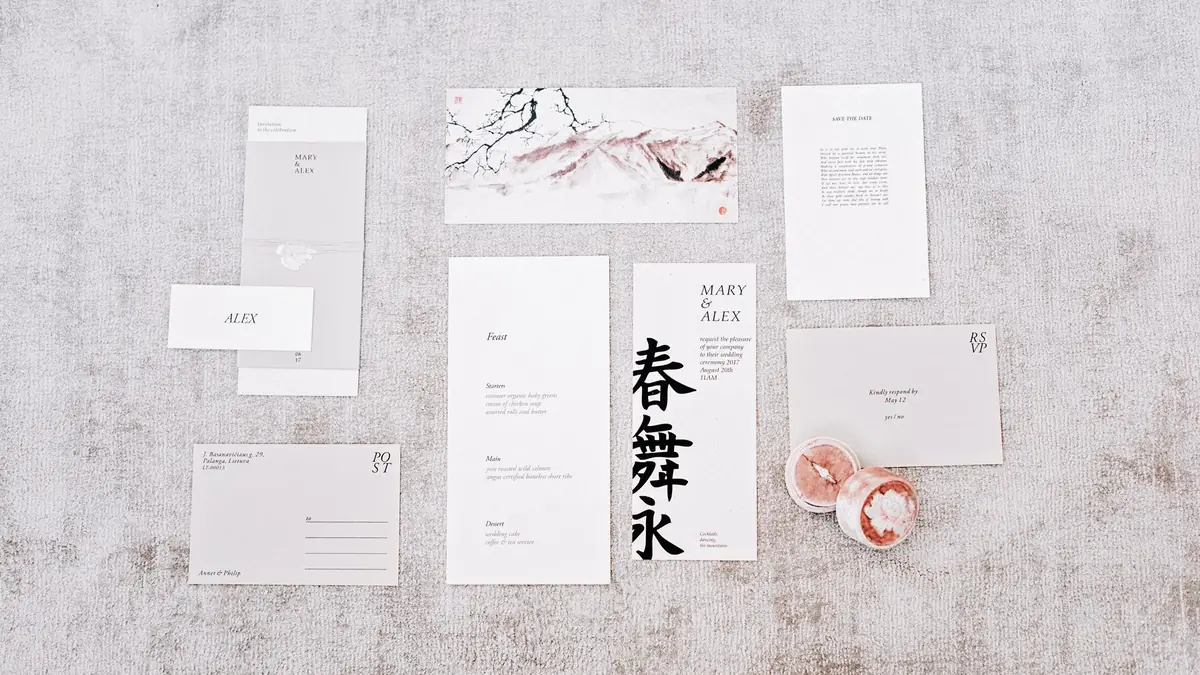
Wedding invitation etiquette: the complete guide to the dos and don'ts
Etiquette isn't about stiff rules. It's about making sure every guest knows they're welcome, what's happening and what you need from them. Here are the questions couples ask most, with clear answers and wording you can use.
In this article
- The golden rule: clarity is kindness
- Who to invite (and who you don't have to)
- Who hosts, and whose names come first
- Timing: when to send everything
- Being clear about who's invited
- What to include on the invitation
- Paper and online invitations
- RSVP etiquette, for couples and guests
- Addressing invitations properly
- Special situations
- When something goes wrong
- After the wedding: thank-you notes
- Etiquette, made easier
- Questions couples ask
Wedding invitations carry a surprising amount of weight. In a few lines, they tell guests who's getting married, who's hosting, when and where to be, what to wear, whether they can bring someone, and how to reply. Get those details right and the rest of the planning runs smoothly. Leave something unclear and you'll spend weeks answering the same questions by text.
The good news is that wedding invitation etiquette has become more relaxed. Couples host their own weddings, invitations go out by email and text, and nobody expects you to know the rules of formal stationery by heart. But a few principles haven't changed, because they're really about kindness and clarity. This guide covers them all, from the guest list to the thank-you notes.
The golden rule: clarity is kindness
Almost every etiquette question has the same answer underneath: make it easy for your guests. A good invitation removes doubt. Guests shouldn't have to wonder whether their children are included, which event starts when, or whether "black tie optional" means they need to rent a tuxedo. If a detail could cause confusion, address it, kindly and clearly.
The second principle is consistency. Whatever rules you choose about plus-ones, children or colleagues, apply them the same way to both sides of the family. Exceptions are where hurt feelings start.
A good invitation answers every question before a guest has to ask it.
Who to invite (and who you don't have to)
The guest list comes before the invitation, and it's where most etiquette questions start. A few guidelines help.
Who should get an invitation
- Your officiant and their partner, if they're a family friend or you know them well. It's a kind gesture even if they decline.
- The wedding party, even though they obviously know about it. A formal invitation is a keepsake, and it collects their RSVP and meal choice like everyone else's.
- Parents and grandparents, for the same reasons.
- The partner of anyone married, engaged or in a long-term relationship, by name, whether or not you know them well.
Who you don't have to invite
- Colleagues, unless you're close outside work. If you invite some, avoid leaving out just one or two from the same team.
- People who invited you to their wedding. Reciprocity is a nice gesture, not an obligation, especially if your wedding is smaller.
- A guest's new partner if you've never met them and they aren't in an established relationship.
- Children, if you'd like an adults-only celebration. More on wording that below.
If you haven't built your list yet, our guide to making your wedding guest list explains how to set a number, divide it fairly and apply rules to the hard cases.
Who hosts, and whose names come first
Traditionally, the hosts of a wedding are the people paying for it, and their names open the invitation. Today, the line is often more flexible, and the hosts are simply whoever the couple wants to honour.
| Situation | How the invitation usually opens |
|---|---|
| The couple is hosting | "Together with their families, Maya Chen and Daniel Ortiz invite you…" |
| The bride's parents host (traditional) | "Mr. and Mrs. Robert Chen request the pleasure of your company at the marriage of their daughter…" |
| Both families host | "Linda and Robert Chen and Ana and Luis Ortiz invite you to celebrate the marriage of their children…" |
| Divorced parents host | Each parent on their own line, the mother's name usually first. |
| A parent has passed away | "Maya Chen, daughter of Linda Chen and the late Robert Chen…" |
In traditional wording, the bride's name comes first. For couples of any gender, choose any order you like; many couples go alphabetically or by whichever sounds better aloud. What matters is that both families feel included. Our wedding invitation wording guide has full examples for each of these situations.
"The honour of your presence" or "the pleasure of your company"?
By tradition, "the honour of your presence" (or "honor", in US spelling) is used for ceremonies in a house of worship, and "the pleasure of your company" for ceremonies elsewhere and for receptions. Very few guests will notice the difference, but if you're writing a formal invitation, it's a nice detail to get right.
Timing: when to send everything
Timing is one of the few areas where etiquette and practicality agree completely. Guests need enough notice to plan, but not so much that the invitation gets forgotten.
| What | Local wedding | Destination wedding |
|---|---|---|
| Save the date | 6–8 months before | 9–12 months before |
| Invitation | 6–8 weeks before | 10–12 weeks before |
| RSVP deadline | 3–4 weeks before | 6–8 weeks before |
| Thank-you notes | Within 2–3 months after | Within 2–3 months after |
Our complete timeline for save the dates and invitations covers holiday weekends, short-notice weddings and multi-day celebrations too.
Being clear about who's invited
This is the area that causes the most confusion, and the most awkward conversations. The rule is simple: the names on the invitation are exactly the people invited.
Plus-ones
If a guest may bring a companion, say so: "Jordan Lee and guest" on a paper invitation, or a plus-one option on an online RSVP. If they may not, address the invitation to them alone, and make the RSVP show the number of seats reserved. Guests who are married, engaged or living together should be invited together, by name.
We have reserved 2 seats in your honour.
Kindly reply by May 15.
Our guide to plus-one and adults-only wording has more examples, including how to answer a guest who asks if they can bring a date.
Children
If children are invited, include their names on the invitation (or write "and family" for a casual wedding). If the wedding is adults-only, address the invitation only to the adults. You can add a gentle line on your website or invitation page, but avoid putting "no children" in large letters on a formal invitation.
We love your little ones, but our celebration will be adults only.
We hope this gives you a night off to enjoy with us.
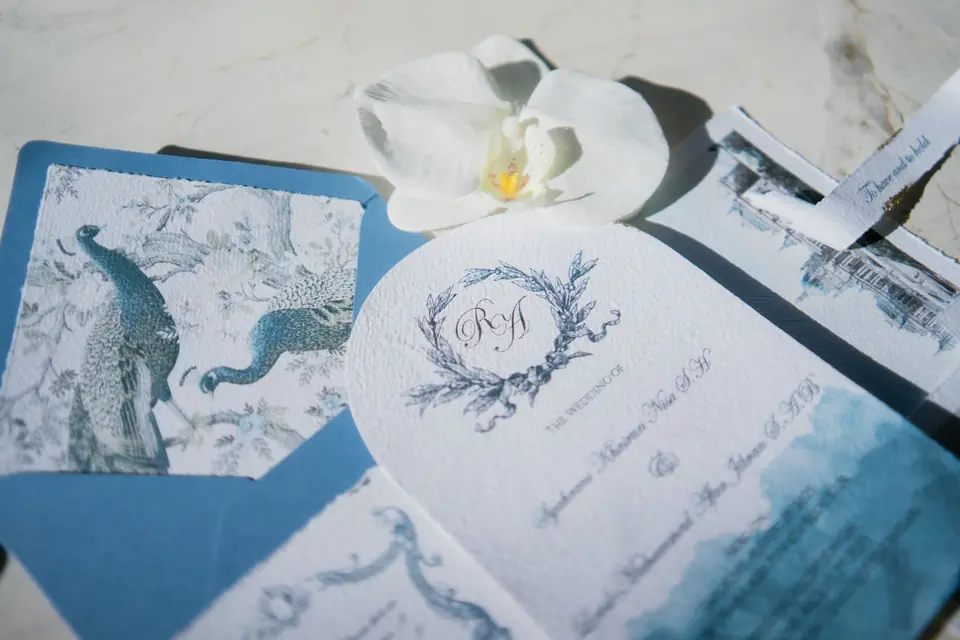
What to include on the invitation
A wedding invitation needs to answer a handful of questions clearly. Everything else can go on a details card, your wedding website or your online invitation page.
The hosts (if any) and both of your full names.
The day, date and time. Formal invitations spell them out in words.
The venue name and city, plus the full address on a details card or online.
"Reception to follow" or "Dinner and dancing to follow".
If you have one. Usually at the bottom right, or on the details card.
The RSVP deadline and how to answer: a card, a website or a link.
What not to include on a formal invitation
- Registry information. Traditionally, gifts aren't mentioned on the invitation itself. Put registry links on your wedding website or online invitation page. Our registry etiquette guide explains how to mention gifts politely.
- "No children" or "no plus-ones" in bold. Show who's invited through the names, and explain on the website if needed.
- Long directions. They clutter the design. A details card or a map link works better.
Dress codes
If you'd like guests to dress a certain way, say so on the invitation. Use a standard term, like "Black tie", "Cocktail attire" or "Garden party attire", so guests know what to expect. If the setting has practical needs, such as grass, sand or cold evenings, add a friendly note. Our guide to wedding dress codes explains what each term means for guests.
Paper and online invitations
Online wedding invitations are fully acceptable today, for weddings of every style and size. For many couples, they're the default: they're faster, they're kinder to the environment, guests reply from their phones, and nothing gets lost in the mail. Some guests, often grandparents, still love a printed card, and many couples send a few printed invitations as keepsakes and invite everyone else online.
| Question | Paper | Online |
|---|---|---|
| Is it formal enough? | ✓ | ✓ |
| Personal greeting | Name on the envelope | Name on the invitation and in the message |
| Registry details | On a separate card or website | On the invitation page, in their own section |
| Easy to reply | ~ | ✓ |
| Can update details later | ✕ | ✓ |
| Time to prepare | Several weeks | Same day |
The etiquette for online invitations is the same as for paper, with a few extras: send each household its own personal link rather than a group message, use a design that matches the tone of the day, and include every detail a printed suite would. For more on choosing between them, see digital vs paper wedding invitations, and for how to send them, sending invitations by email, WhatsApp or text.
RSVP etiquette, for couples and guests
RSVP stands for répondez s'il vous plaît, French for "please reply". It's a request, and replying promptly is one of the few firm obligations guests have. As a couple, your job is to make replying easy and to set a clear deadline.
For couples
- Set the RSVP deadline 3 to 4 weeks before the wedding, about a week before your caterer needs final numbers.
- Ask only what you need: attendance for each event, meal choices, dietary or accessibility needs, and plus-one names if allowed.
- Send one reminder about a week before the deadline, and contact anyone left personally afterwards.
- Thank guests for replying, especially those who can't come.
Need the exact words? Our RSVP wording examples cover reply cards, online RSVPs and reminder messages.
For guests
- Reply by the deadline, even if you can't come.
- Don't add people who aren't named on the invitation.
- If your plans change after you reply, tell the couple as soon as possible.
Addressing invitations properly
How you write guests' names matters, especially for formal weddings. Use full names, include titles for formal invitations, and name everyone who's invited. For married couples, "Mr. and Mrs. James Patel" is traditional, while "Priya and James Patel" is more modern and widely used. For couples with different last names, write both full names. For doctors, judges and military officers, use their titles.
There are many more cases, from same-sex couples to widowed guests to families with adult children. Our full guide on how to address wedding invitations covers each one, with examples.
Special situations
Second weddings and vow renewals
There's no special etiquette for second weddings. The same invitation rules apply. Couples often host these themselves, and the wording tends to be warmer and less formal. For a vow renewal, the couple usually hosts, and the invitation says "renewal of vows" rather than "marriage".
Small or private ceremonies with a bigger party
If you're marrying with just a few people and celebrating with everyone later, send a ceremony invitation to the small group, and a separate reception or party invitation to everyone else. Be clear on the party invitation that the ceremony is private, so nobody feels left out by surprise.
Maya and Daniel were married in a small ceremony in June.
Please join us for a celebration of their marriage
Saturday, the twelfth of September
at seven o'clock in the evening.
Multi-day and multicultural weddings
When a wedding spans several events, such as a welcome dinner, a mehndi, a ceremony and a reception, each guest should know exactly which events they're invited to. On paper, that usually means separate insert cards. Online, each household can see only its own events. Our guide to multi-day and multicultural wedding invitations explains how to handle this, and for celebrations in two languages, see bilingual wedding invitations.
Destination weddings
Guests need more time and more information for a destination wedding: travel, passports, accommodation and costs. Send save the dates earlier, keep the RSVP window longer, and accept that more people will decline. Our guide to destination wedding invitations covers the full timeline.
When something goes wrong
Even well-planned invitations sometimes need a correction. Don't panic. Most problems can be fixed with a short, friendly message.
| Problem | What to do |
|---|---|
| A typo in the date, time or venue | Send a short correction to every guest right away. With online invitations, update the details once and resend. |
| A guest RSVPs for someone not invited | Call or message them kindly: explain that you've had to keep numbers limited, and you hope they understand. |
| You forgot someone | Invite them as soon as you notice, personally, with a short call or message. Most people never know. |
| The date or venue changes | Tell guests immediately, by the fastest route. Update every invitation and your website. |
| Someone asks why they weren't invited | Be honest and kind: you kept it small, and it was hard to choose. |
After the wedding: thank-you notes
Thank-you notes close the loop. Send one to everyone who gave a gift, and ideally to anyone who helped: the friend who did your hair, the aunt who hosted the shower. Aim to send them within two to three months of the wedding. A handwritten card is lovely; a personal email is acceptable too, as long as it mentions the gift and something specific about the guest.
Dear Aunt Rosa,
Thank you so much for the beautiful serving bowl. It's already the centre of our table. Having you there to celebrate with us meant the world.
With love,
Maya and Daniel
Etiquette, made easier
Most of wedding invitation etiquette comes down to a few habits: be clear, be consistent, give people time, and make replying easy. Online invitations take care of much of this by design. With I Say I Do, each household gets its own personal link, sees only the events it's invited to, and replies for exactly the people named on its invitation. Registry links have their own place on the page, reminders go only to people who haven't replied, and if a detail changes, you update it once. It's free for up to 25 guests, and larger weddings pay once (from US$19 or CA$25 for 75 guests), with no subscription. Browse the invitation designs to see how yours could look.
Questions couples ask
Is it rude to send wedding invitations by email or text?
No. Online invitations are widely accepted today, including for formal weddings. Send each household its own personal invitation rather than a group message, and include every detail a printed invitation would.
Should registry information go on the wedding invitation?
Traditionally, no. Put registry links on your wedding website or online invitation page. Guests will look for it there.
How do I say no children on a wedding invitation?
Address the invitation only to the adults who are invited. If you want to explain, add a gentle line on your website or invitation page rather than printing "no children" on the invitation.
Do I have to give every guest a plus-one?
No. Married, engaged and long-term couples should be invited together. For single guests, a plus-one is a kind gesture but not required.
Whose name goes first on a wedding invitation?
Traditionally the bride's name comes first. For couples of any gender, choose whatever order you like, such as alphabetical or whichever sounds better.
How far in advance should wedding invitations be sent?
Six to eight weeks before a local wedding, and ten to twelve weeks before a destination wedding.
Should the wedding party receive invitations?
Yes. They know about the wedding, but a formal invitation is a keepsake and collects their RSVP and meal choice like everyone else's.
What should I do if a guest RSVPs for someone who wasn't invited?
Contact them kindly and privately. Explain that numbers are limited and that the invitation was for the people named on it.
Make your invitation in minutes
Beautiful designs, an RSVP for each guest and automatic reminders. Free for up to 25 guests.
Start freeKeep reading
-
 23 listopada 2026 · 14 min read
How to address wedding invitations: examples for every guest
How to address wedding invitations and envelopes: married couples, different last names, doctors, families, plus-ones, widowed guests and online invitations.
-
 23 listopada 2026 · 7 min read
How to word plus-ones and adults-only weddings politely
Polite wording for plus-ones, no plus-ones and adults-only weddings, how to decide who gets a guest, and how to handle the awkward questions kindly.
-
 23 listopada 2026 · 13 min read
Wedding dress codes explained, from black tie to casual
Every wedding dress code explained: white tie, black tie, black tie optional, cocktail, semi-formal, beach and casual, plus how to put a dress code on your invitation.