यह लेख इस भाषा में भी है: हिन्दी. How to make a wedding seating chart (without the family drama) →
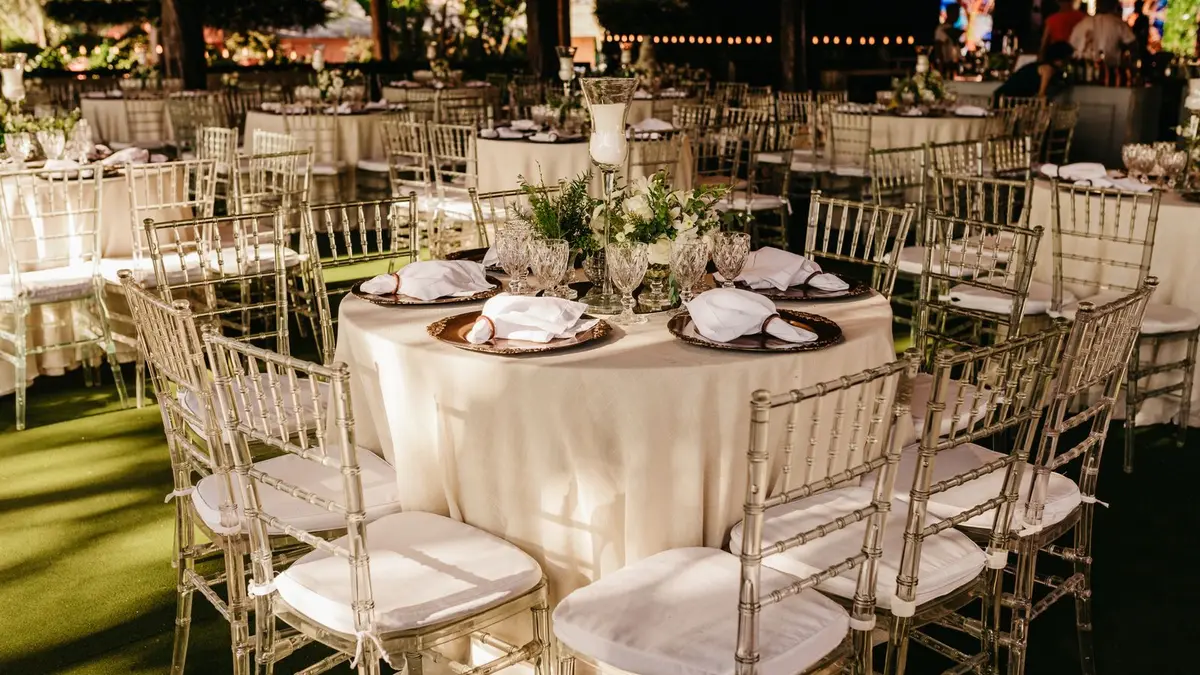
How to make a wedding seating chart (without the family drama)
The seating chart has a reputation as the most stressful job in wedding planning. It doesn't have to be. With your RSVPs in, a clear method and a few etiquette rules, most couples finish theirs in an evening or two. Start by working out how many tables you need, then follow the steps below.
In this article
- How many tables do you need?
- Do you need a seating chart at all?
- Building your seating chart, step by step
- Who sits where: a simple etiquette guide
- Tricky situations (and how to handle them)
- When to do your seating chart
- How to display your seating chart
- Your seating chart checklist
- Planning the room, not just the tables
- Last-minute changes
- Finally: it's one evening
- Questions couples ask
Somewhere between booking the venue and buying the rings, most couples hear the same warning: “Wait until you do the seating chart.” It's true that seating 120 people, some of whom haven't spoken since a 2014 barbecue, takes some thought. But the seating chart is also one of the kindest things you can do for your guests. It means nobody wanders around with a plate looking for a seat, families sit together, and the shy cousin gets a table with people they'll actually enjoy.
This guide gives you a free table calculator, a step-by-step method for building your chart, etiquette for the tricky situations every family has, and ideas for displaying the chart on the day.
How many tables do you need?
Before you place a single name, work out how many tables your guest count needs. The calculator below uses common rental table sizes. Try a few table types to see which fits your room and your guest count best.
Work out how many tables you need before you start placing names. Change the table type to compare.
Rentals and venues measure differently, so confirm seat counts and room layout with your venue. Leave about 5 feet (1.5 m) between round tables so servers and chairs can move.
Your venue will usually have a floor plan with standard table layouts. Ask for it early, and ask how many tables fit comfortably alongside the dance floor, the bar, the band or DJ and any buffet stations. The answer may decide your table size for you.
| Table | Seats comfortably | Seats snugly | Good to know |
|---|---|---|---|
| 60-inch round (152 cm) | 8 | 10 | The most common wedding table. 10 is cosy but normal. |
| 72-inch round (183 cm) | 10 | 12 | Fewer tables, but harder to talk across. |
| 6-foot rectangle (183 cm) | 6 | 8 | 8 if you seat people at the ends. |
| 8-foot rectangle (244 cm) | 8 | 10 | Long “family style” rows are made of these joined together. |
| Sweetheart table | 2 | 2 | Just the couple, facing the room. |
Do you need a seating chart at all?
Not every wedding needs assigned seating, but most sit-down receptions benefit from it. Here's a quick way to decide.
| Option | How it works | Best for |
|---|---|---|
| Assigned seats | Each guest has a named place at a table | Plated dinners with meal choices; very formal weddings |
| Assigned tables | Guests know their table, then choose their seat | Most weddings; the best balance of order and freedom |
| Open seating | Guests sit wherever they like | Cocktail receptions, small weddings, buffets with plenty of extra seats |
| Reserved tables only | Family tables are reserved; everyone else sits freely | Relaxed weddings where you still want family up front |
Building your seating chart, step by step
- Wait for your final RSVPs
Start after your RSVP deadline, once you know who's coming. Building a chart from a guest list that's still changing means doing it twice.
- Sort guests into circles
Write each guest into a group: your family, your partner's family, school friends, university friends, work, neighbours, family friends, plus-ones.
- Place the VIP tables first
Decide where you'll sit (a sweetheart table, a head table or with family), then place parents, grandparents and the wedding party around you.
- Fill tables from each circle
Most groups fill one or two tables on their own. Split large groups along natural lines, like “college friends” and “roommates”.
- Mix the leftovers thoughtfully
Guests who don't fit a group go where they'll have something in common: age, interests, a shared city, kids the same age.
- Check the tricky pairs
Go through any family tensions, exes or divorced parents and make sure each has a comfortable spot.
- Place tables in the room
Family closest to you, the wedding party nearby, older guests away from the speakers, and the party crowd near the dance floor.
- Share it and sleep on it
Show the draft to one or two trusted family members who know everyone. Then leave it for a day and look again.
Who sits where: a simple etiquette guide
The couple
You have three main choices. A head table seats you with your wedding party, usually along one side facing the guests. A sweetheart table is just the two of you, which many couples love because it gives them a few minutes to talk during dinner. Or you can sit at a family table with parents and grandparents, which feels warm and relaxed.
Parents and grandparents
Traditionally, each set of parents hosts a table near the couple, with grandparents, siblings who aren't in the wedding party, and the officiant and their partner. Many couples now seat both sets of parents together at one table, which is a lovely gesture if everyone gets along.
The wedding party and their partners
If your wedding party sits at a head table, their partners and dates usually sit at a table nearby, ideally together, so nobody spends dinner alone with strangers. If you have a sweetheart table, the wedding party can sit with their partners at tables close to you.
Children
Young children usually sit with their parents. If you have several children aged about 5 to 12, a kids' table near their parents (with crayons, activities and a children's meal) can be a highlight of their day. Babies and toddlers stay with their parents, with space for a high chair. If your wedding is adults-only, see our guide to plus-one and adults-only wording.
Older guests
Seat grandparents and older guests where they can see and hear the toasts, away from the speakers, and close to the restrooms and exits. Check whether anyone uses a wheelchair or walker, and leave a clear path and an open space at the table.
Single guests
Avoid a “singles table” that feels like a spotlight. Instead, seat single guests with people they'll get along with, close to the action. A friendly mix of couples and singles who share interests usually works best.
A good seating chart isn't about rules. It's about making sure every guest has someone to talk to.
Tricky situations (and how to handle them)
Give each parent their own table near you, at similar distance, each with their own family and partner. Ask each privately what would make them comfortable.
Seat them on opposite sides of the room, both in good spots. Nobody should feel “demoted”.
Separate tables, ideally not facing each other. If they're both close friends, put each with their own group.
Seat them with at least one person who speaks their language, or with bilingual family members.
Seat them with their partner, of course, and with the friendliest people from that partner's circle.
Mark meal choices and allergies on place cards so servers can find each guest quickly.
When to do your seating chart
- 8–10 weeks beforeGet your venue floor plan
Ask how many tables fit and where the dance floor, bar and stage go.
- 6–8 weeks beforeSend invitations with an RSVP date
Ask for meal choices and dietary needs on the RSVP.
- 4 weeks beforeRSVP deadline
Follow up with anyone who hasn't replied.
- 3 weeks beforeDraft your chart
Group guests, place VIP tables, fill the rest.
- 2 weeks beforeFinalise and order signage
Send the final count and table list to your caterer.
- 1 week beforePrint escort cards or the seating display
Give your coordinator a copy of the chart, with meal choices.
The RSVP deadline matters more than it seems. Your caterer usually needs final numbers and meal counts 10 to 14 days before the wedding, and you can't finish the chart until you know who's coming. Collecting RSVPs online helps a lot here: replies, meal choices and dietary notes arrive in one list you can sort and export, instead of a pile of cards and text messages.
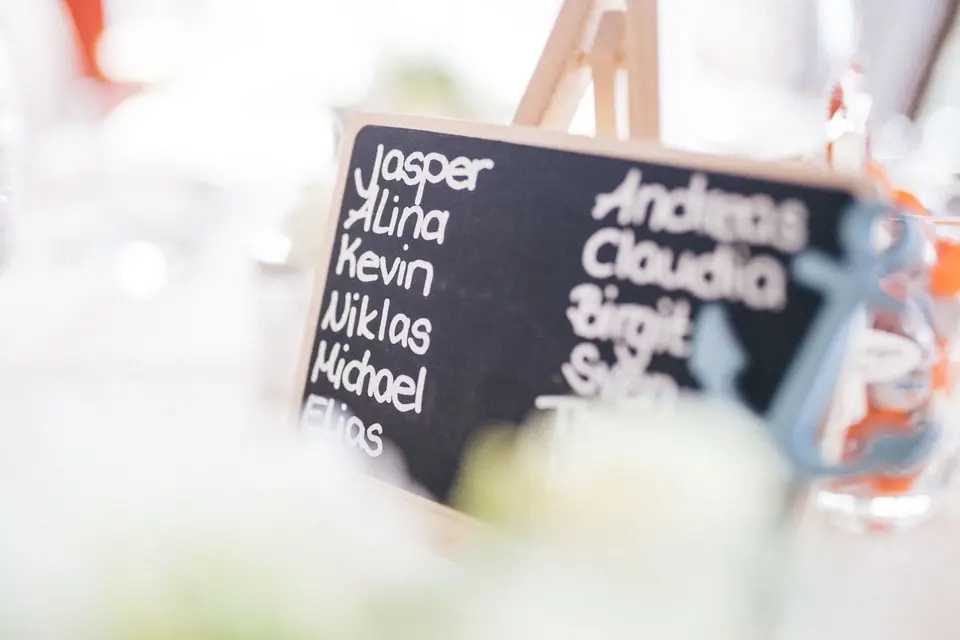
How to display your seating chart
On the day, guests need a quick way to find their table. There are two classic options, and plenty of creative versions of each.
| Escort cards | Seating chart display | |
|---|---|---|
| What it is | A small card for each guest or couple, with their table number | One large sign listing every guest and their table |
| Best for | Weddings up to about 150 guests | Larger weddings, or any size |
| Last-minute changes | Easy: swap one card | Harder, unless it's printed late or handwritten |
| Doubles as | A favor or keepsake, if you like | A photo backdrop and decor piece |
| Sort guests by | Alphabetical order on a table | Alphabetical, or by table number |
For a large seating chart display, list guests alphabetically by last name, with their table number next to each name. Guests can find themselves in seconds. Listing by table looks pretty, but it makes 150 people read every table looking for their name, which creates a crowd at the sign just as cocktail hour ends.
Names written on a large mirror or clear acrylic panel. Elegant and very photogenic.
Cards clipped to a wall of greenery or flowers. Doubles as a photo spot.
Each guest's name and table on a small favor: a mini bottle, a cookie, a candle.
Name tables after places you've travelled, your favourite books or songs, with a little story on each card.
Your seating chart checklist
Planning the room, not just the tables
Where each table sits in the room matters as much as who sits at it. A few guidelines help everyone enjoy the evening:
- Keep sight lines clear. Every table should be able to see the couple's table and the spot where toasts happen. Avoid putting anyone behind a pillar or the DJ booth.
- Put energy near the dance floor. Your friends who will dance from the first song should be closest to the floor. Their enthusiasm pulls everyone else in.
- Give quiet tables a quiet spot. Guests who prefer conversation, including many older relatives, will thank you for a table a little further from the speakers.
- Think about traffic. Tables right next to the bar, the restrooms or the kitchen door see constant foot traffic. Use those spots for guests who don't mind a bit of bustle.
- Leave room to move. About 5 feet (1.5 m) between round tables lets servers pass and guests push their chairs back without bumping into each other.
Ask your venue manager or coordinator to walk the room with you, floor plan in hand. Ten minutes on site often shows you things a drawing can't, like where the afternoon sun hits or which corner has the draughty door.
Last-minute changes
Someone will cancel the night before. Someone else will bring a surprise guest. It's normal, and it's why you leave a spare seat or two at a few tables. Give your coordinator or a trusted friend the final chart and a pen, and let them handle changes on the day. A small empty seat isn't a problem. A guest with nowhere to sit is, and spare seats prevent it.
Finally: it's one evening
It's easy to treat the seating chart like a test of your diplomatic skills. Remember that guests spend about 90 minutes at their table before the dancing starts, and after that, everyone moves around anyway. If each guest has a few people they know or will enjoy, you've done it right. Then you can get back to the fun parts, like choosing your wedding hashtag or building your wedding day timeline.
Questions couples ask
When should you make your wedding seating chart?
Start right after your RSVP deadline, about three to four weeks before the wedding, and finish it one to two weeks before, when your caterer needs final numbers and meal choices.
How many people fit at a wedding table?
A 60-inch round table seats 8 comfortably and 10 snugly. A 72-inch round seats 10 to 12. A 6-foot rectangle seats 6 to 8, and an 8-foot rectangle seats 8 to 10.
Should a seating chart be alphabetical or by table?
For a large display, alphabetical by last name is easiest for guests, with the table number next to each name. Listing by table looks pretty but makes guests search every table for their name.
Do we have to assign seats or just tables?
Assigning tables is enough for most weddings. Assign individual seats if you're serving a plated dinner with several meal choices, so servers know who ordered what.
Where should divorced parents sit at a wedding?
Usually at separate tables, each near the couple and at a similar distance, with their own family members and partners. Ask each parent privately what would make them comfortable.
Is a singles table a good idea?
Usually not. Seat single guests with people they'll get along with, based on shared friends or interests, rather than grouping them by relationship status.
Make your invitation in minutes
Beautiful designs, an RSVP for each guest and automatic reminders. Free for up to 25 guests.
Start freeKeep reading
-
 23 नवंबर 2026 · 12 min read
Wedding day timeline: build your schedule, minute by minute
Build your wedding day timeline in seconds with our free tool, with sample schedules for 2 PM, 4 PM and 6 PM ceremonies, first looks and every reception moment.
-
 23 नवंबर 2026 · 12 min read
How much alcohol for a wedding? Free calculator and shopping list
Work out exactly how much wine, beer, liquor and champagne to buy for your wedding with our free alcohol calculator, plus bar types, costs and serving tips.
-
 23 नवंबर 2026 · 19 min read
The complete wedding planning checklist: a month-by-month timeline
A month-by-month wedding planning checklist from engagement to the day after: budget, guest list, venue, vendors, save the dates, invitations, RSVPs and final details.